
Ontario Parks manages over 340 campgrounds across the province, yet fewer than 30 percent of campers venture beyond car-accessible sites to experience true backcountry hiking trail campgrounds. This gap represents a missed opportunity for outdoor enthusiasts seeking authentic wilderness experiences combined with the physical challenge of multi-day hiking adventures.
Hiking trail campgrounds offer a unique blend of accessibility and wilderness immersion that traditional drive-in sites cannot match. These specialized camping areas require hikers to trek varying distances along established trails, carrying gear to remote locations where solitude and natural beauty become the primary amenities. For 2026, Ontario’s trail camping infrastructure has expanded with improved booking systems, enhanced trail maintenance, and updated facilities that balance comfort with environmental stewardship.
Key Takeaways
- Ontario offers diverse hiking trail campgrounds ranging from 2-kilometer beginner routes to 80-kilometer advanced backcountry circuits
- Peak season reservations for popular trail campgrounds fill within hours of opening, requiring advance planning for 2026 visits
- Most hiking trail campgrounds require permits booked through Ontario Parks or individual conservation authorities
- Essential gear includes proper footwear, water filtration systems, bear-proof food storage, and navigation tools
- Trail camping provides significant cost savings compared to drive-in sites while offering superior wilderness experiences
Understanding Hiking Trail Campgrounds in Ontario
Hiking trail campgrounds differ fundamentally from traditional campgrounds through their access requirements and facility design. These sites mandate that visitors hike a minimum distance carrying all necessary equipment, creating natural barriers that limit crowds and preserve wilderness character.
Types of Trail Camping Experiences
Ontario’s trail camping landscape divides into three primary categories. Walk-in campgrounds require short hikes of 100 meters to 2 kilometers from parking areas, offering wilderness ambiance with relatively easy access. These sites suit families and beginners testing their backcountry readiness.
Backcountry campgrounds demand longer treks ranging from 5 to 20 kilometers, featuring primitive facilities limited to fire pits, thunder boxes (outdoor toilets), and designated tent pads. These locations attract experienced hikers seeking genuine isolation.
Long-distance trail systems incorporate camping zones along multi-day routes like the Bruce Trail or Algonquin’s Highland Trail. Hikers progress through multiple campsites over several days, experiencing diverse ecosystems and terrain challenges.
Permit Systems and Regulations
The Ontario Parks reservation system opens booking windows at specific dates each year, typically in January for summer season reservations. For 2026, the system has implemented improved queue management to handle high demand for popular hiking trail campgrounds.
Permits typically cost between $12 and $15 per person per night for backcountry sites, significantly less than drive-in campgrounds averaging $40-50 nightly. However, these fees exclude amenities like showers, electrical hookups, and vehicle access.
Conservation authorities managing trails outside provincial parks maintain separate booking systems. Hikers planning trips across multiple jurisdictions must navigate different platforms and regulation sets.
Top Hiking Trail Campgrounds for 2026
Algonquin Provincial Park Backcountry
Algonquin’s backcountry system remains Ontario’s premier hiking trail camping destination, offering over 1,900 campsites accessible via 140 kilometers of hiking trails. The Highland Backpacking Trail presents a 35-kilometer loop requiring 2-4 days, featuring stunning lookouts over forested valleys and access to remote interior lakes.
The Western Uplands Backpacking Trail extends 88 kilometers through Algonquin’s western region, challenging experienced hikers with rugged terrain and significant elevation changes. This trail system includes 15 designated camping areas spaced strategically for multi-day journeys.
Algonquin’s trail campgrounds provide bear-proof food lockers, reducing wildlife conflicts while protecting provisions. Water sources appear regularly along trails, though filtration remains mandatory. Reserve these sites through the Ontario Parks website at CampEscape.ca to secure your preferred dates.
Killarney Provincial Park
Killarney’s La Cloche Silhouette Trail ranks among Canada’s most scenic hiking routes, traversing 80 kilometers of white quartzite ridges, crystal-clear lakes, and pink granite shores. The trail requires 7-10 days for complete circumnavigation, with camping permitted only at designated backcountry sites.
The park’s distinctive landscape inspired the Group of Seven artists, and contemporary hikers discover the same dramatic vistas that captured those painters’ imaginations. Trail campgrounds feature spectacular water access for swimming and fishing, with lake trout and smallmouth bass populations thriving in Killarney’s pristine waters.
Weather conditions change rapidly in Killarney’s exposed terrain. Hikers should prepare for temperature swings and potential storms even during summer months. The trail’s difficulty level demands solid navigation skills and physical conditioning.
Bruce Trail Campgrounds
The Bruce Trail stretches 890 kilometers from Niagara to Tobermory, representing Canada’s oldest and longest marked footpath. While day hiking dominates Bruce Trail usage, designated camping areas enable multi-day section hiking adventures.
Bruce Trail Conservancy manages camping at club-operated sites and coordinates with private landowners offering trail camping privileges. Sites like the Beaver Valley and Sydenham sections provide accessible entry points for overnight hiking trips.
Trail towns along the Bruce offer resupply opportunities, allowing hikers to carry lighter packs between camping segments. This infrastructure supports extended journeys without requiring full wilderness self-sufficiency.
Frontenac Provincial Park
Located north of Kingston, Frontenac Provincial Park features 22 backcountry campsites distributed across 5,355 hectares of Canadian Shield wilderness. The park’s trail network totals 100 kilometers, with loops ranging from overnight trips to week-long expeditions.
Frontenac’s hiking trail campgrounds suit intermediate hikers seeking moderate challenges without Algonquin’s crowds. The terrain includes rocky ridges, beaver ponds, and mixed forests representative of eastern Ontario’s transition zone between northern boreal and southern deciduous ecosystems.
Wildlife viewing opportunities abound, with white-tailed deer, black bears, and diverse bird populations inhabiting the park. Spring and fall migrations bring exceptional birdwatching, while summer offers warm swimming in numerous lakes.
Sleeping Giant Provincial Park
Thunder Bay’s Sleeping Giant features the dramatic Top of the Giant Trail, a challenging 22-kilometer route ascending to spectacular Lake Superior viewpoints. The trail includes backcountry camping at Talus Lake, positioned strategically for two-day hiking itineraries.
The park’s coastal location creates unique microclimates and weather patterns. Fog frequently rolls off Lake Superior, creating mystical atmospheric conditions that transform familiar landscapes. Hikers should pack warm layers regardless of season, as temperatures near the lake remain significantly cooler than inland areas.
Indigenous history permeates Sleeping Giant, with Ojibwe legends explaining the peninsula’s distinctive profile. Respectful visitors appreciate this cultural significance while enjoying the natural wonders.
Planning Your Hiking Trail Camping Trip
Essential Gear and Equipment
Successful trail camping requires careful equipment selection balancing weight, functionality, and safety. A quality backpack sized 50-70 liters accommodates multi-day provisions while distributing weight ergonomically across hips and shoulders.
Shelter systems range from ultralight tarp configurations to freestanding tents. Ontario’s variable weather favors fully enclosed tents with rain flies and adequate ventilation preventing condensation buildup. Three-season tents handle conditions from May through October effectively.
Sleep systems including sleeping bags rated for expected temperatures and insulated sleeping pads prevent heat loss to cold ground. Even summer nights in northern Ontario can drop to single-digit Celsius temperatures, particularly at elevation.
Water filtration systems eliminate the need to carry excessive water weight. Pump filters, gravity filters, and chemical treatments all function effectively in Ontario’s backcountry. Carry backup purification methods as redundancy against equipment failure.
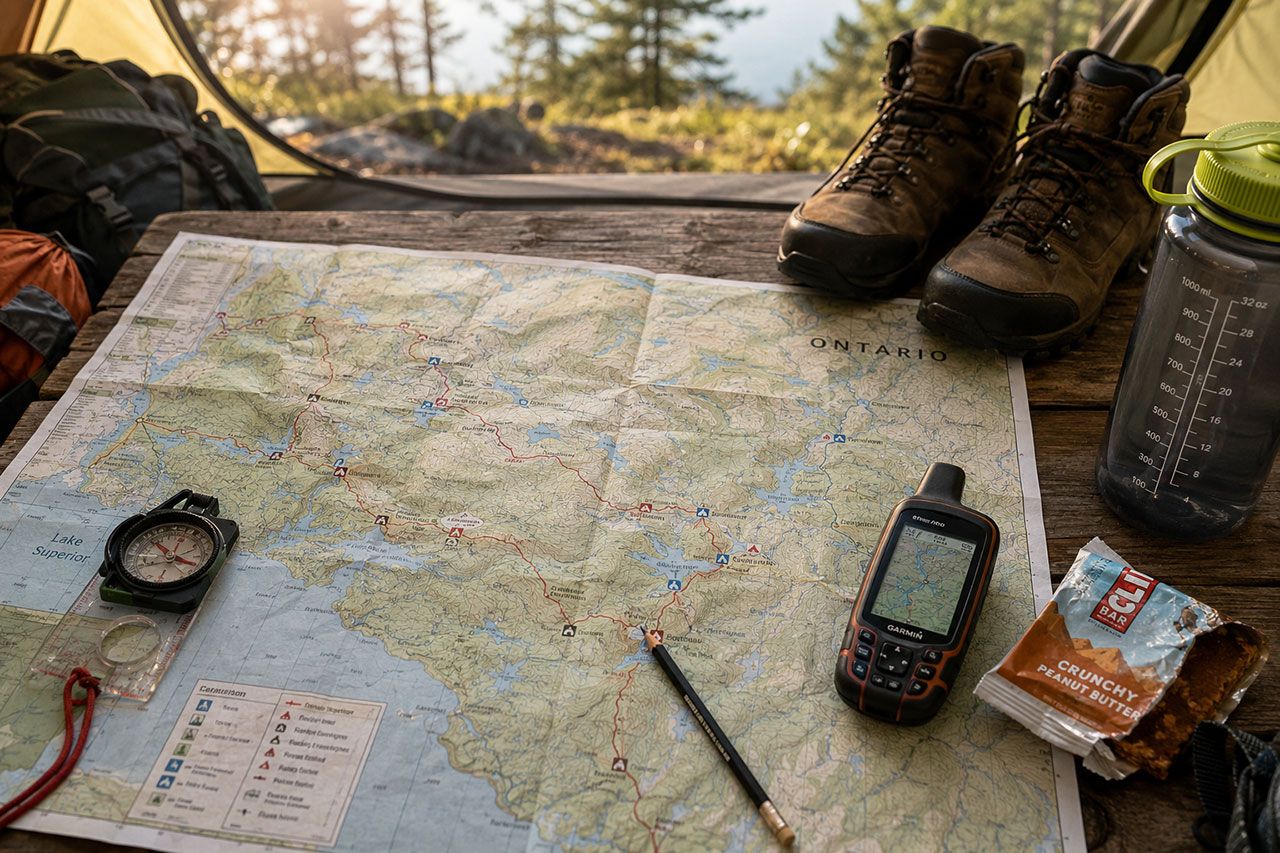
Navigation tools including topographic maps, compasses, and GPS devices prevent dangerous disorientation. While trails receive regular maintenance, fallen trees, overgrown sections, and junction confusion occur regularly. Download offline maps before departing, as cellular coverage remains absent in most backcountry areas.
Food Planning and Bear Safety
Meal planning for hiking trail campgrounds emphasizes calorie density, minimal preparation requirements, and waste reduction. Dehydrated meals, energy bars, nuts, and dried fruits provide efficient nutrition without refrigeration needs.
Bear safety protocols mandate proper food storage at all Ontario hiking trail campgrounds. Use provided bear-proof lockers where available, or hang food in bear bags suspended from tree branches. Never store food, toiletries, or scented items in tents.
Cooking areas should be located 50-100 meters downwind from sleeping areas, minimizing food odors near tents. Clean dishes thoroughly and dispose of grey water properly according to Leave No Trace principles.
Black bears inhabit all regions containing hiking trail campgrounds. While attacks remain extremely rare, proper precautions prevent negative wildlife encounters. Make noise while hiking, particularly in dense vegetation or near water sources where bears feed.
Physical Preparation and Training
Trail camping demands significantly greater physical exertion than car camping. Carrying 15-25 kilograms over varied terrain requires cardiovascular fitness and muscular endurance that casual walking doesn’t develop.
Begin training 8-12 weeks before ambitious trips. Gradually increase pack weight during training hikes, allowing your body to adapt to carrying loads. Focus on leg strength through squats and lunges, and core stability exercises supporting proper pack carriage.
Break in hiking boots thoroughly before multi-day trips. New footwear causes blisters that can end adventures prematurely. Wear boots during training hikes with the socks you’ll use on trail, identifying pressure points and fit issues before they become problems.
Booking Strategies for 2026
Competition for prime hiking trail campgrounds intensifies annually as outdoor recreation popularity grows. Successful booking requires strategic planning and quick action when reservation windows open.
Create Ontario Parks accounts before booking dates arrive, ensuring payment information and user profiles are complete. This preparation eliminates delays when competing for limited sites.
Have alternative dates and locations ready. If your first-choice campground fills immediately, quickly pivot to backup options rather than losing time to disappointment. Flexibility dramatically improves booking success rates.
Consider shoulder seasons for superior availability and enhanced wilderness experiences. Late May and September offer excellent hiking conditions with minimal crowds, though weather variability increases. These periods provide opportunities for spontaneous trips when summer dates prove unavailable.
Visit CampEscape.ca for comprehensive booking resources, campground reviews, and availability tracking across Ontario’s hiking trail campground network.
Safety Considerations and Leave No Trace Ethics
Weather Preparedness
Ontario’s weather creates significant hazards for backcountry travelers. Thunderstorms develop rapidly during summer afternoons, bringing lightning, heavy rain, and temperature drops. Monitor forecasts before departing and understand that conditions change quickly in wilderness areas.
Hypothermia threatens hikers even in summer when wet clothing combines with wind and cool temperatures. Pack rain gear, extra insulation layers, and dry bags protecting critical items from moisture.
Heat exhaustion affects hikers during humid summer conditions, particularly when carrying heavy packs. Maintain hydration, take regular breaks, and recognize early warning signs including dizziness, nausea, and confusion.
Wildlife Encounters
Beyond bears, Ontario’s hiking trail campgrounds host moose, wolves, and smaller mammals requiring respectful distance. Moose prove particularly dangerous during spring calving season and fall rut when protective and aggressive behaviors increase.
Ticks carrying Lyme disease inhabit southern Ontario regions. Perform thorough tick checks after hiking, paying attention to warm, hidden areas. Remove attached ticks promptly using proper techniques to minimize disease transmission risk.
Leave No Trace Principles
Practicing Leave No Trace ethics preserves hiking trail campgrounds for future generations. Pack out all waste including food scraps, toilet paper, and micro-trash. Use established campsites rather than creating new impact areas.
Minimize campfire impacts by using camp stoves for cooking and enjoying fires only where permitted. Keep fires small, burn only dead and downed wood, and ensure complete extinguishment before leaving sites.
Respect quiet hours and other campers’ wilderness experiences. Sound travels extensively across water and through forests, making loud conversations and music particularly intrusive in backcountry settings.
Conclusion
Hiking trail campgrounds in Ontario provide unmatched opportunities for wilderness immersion, physical challenge, and natural beauty exploration. The province’s diverse trail systems accommodate every skill level, from beginner walk-in sites to demanding multi-day backcountry circuits. As 2026 approaches, strategic planning becomes essential for securing reservations at popular locations, with booking windows opening months in advance.
Success in trail camping requires proper equipment, physical preparation, and commitment to safety protocols. Understanding bear safety, weather preparedness, and navigation fundamentals separates enjoyable adventures from dangerous situations. The investment in quality gear and training pays dividends through comfortable, confident wilderness experiences.
Take action now by researching specific hiking trail campgrounds matching your ability level and interests. Create your Ontario Parks account, mark reservation opening dates on your calendar, and begin physical training for your planned trips. Visit CampEscape.ca for detailed campground information, booking assistance, and community insights from experienced trail campers.
Ontario’s hiking trail campgrounds await those willing to venture beyond roadside conveniences into authentic wilderness. The trails call to adventurers ready to carry their homes on their backs, discovering the profound satisfaction that comes from self-sufficient wilderness travel. Your 2026 backcountry adventure begins with a single step onto the trail.
