
Ontario holds more than 250,000 lakes within its borders, more freshwater than almost anywhere else on the planet. That single fact explains why lakefront campsites in Ontario have become some of the most searched outdoor destinations in Canada. Yet with thousands of shoreline options scattered across provincial parks, Crown land, and private resorts, finding the right spot can feel overwhelming. This guide narrows the search, highlighting the top CampEscape selections for tent campers who want water views, quiet mornings, and easy paddling access without wasting a weekend on guesswork.
Whether the goal is a quiet canoe-in site in Algonquin or a family-friendly beach near Muskoka, this article breaks down what makes a great lakefront site, where to find the best ones, and how to book before spots disappear.
Key Takeaways
- Lakefront campsites in Ontario range from drive-in provincial park sites to remote backcountry spots reachable only by canoe.
- Booking early matters most for popular lakes near Algonquin, Killarney, and the Kawarthas, where sites fill up months ahead.
- Water access, shoreline type, and privacy level are the three biggest factors separating an average site from a great one.
- Shoulder-season camping (May, June, September) often means better site availability and fewer bugs.
- Crown land camping offers free lakefront access in Northern Ontario but requires more planning and self-sufficiency.
What Makes Lakefront Campsites in Ontario Stand Out
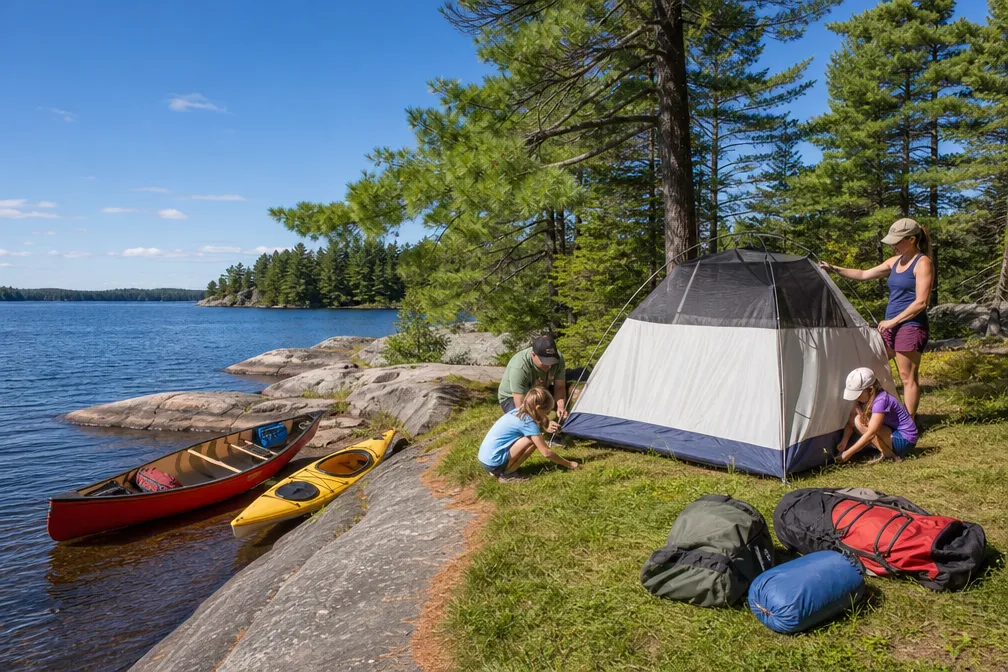
Not every site touching water deserves the label “lakefront.” A true lakefront campsite gives campers direct, unobstructed access to the shoreline for swimming, launching a canoe, or simply watching the sunrise over open water. The best lakefront campsites in Ontario share a few common traits.
Direct water access. No bushwhacking through dense brush to reach the shore. The strongest sites have a clear path, a beach, or a smooth rock landing for canoes and kayaks.
Privacy from neighbouring sites. Trees, rock outcrops, or distance separate one campsite from the next. This matters most in busy provincial parks during July and August.
Good tent pads. Flat, dry ground near the water but far enough back to avoid flooding during heavy rain or wake from passing boats.
Fire safety and fire pits. Established fire rings reduce environmental damage and meet provincial park regulations.
Wind and sun exposure. East-facing sites catch sunrise views, while sites tucked into a bay offer shelter from strong afternoon winds common on larger lakes.
“A great lakefront site is not just about the view. It is about how easily you can live beside the water for three days without fighting the terrain.”
Where to Find the Best Lakefront Campsites in Ontario
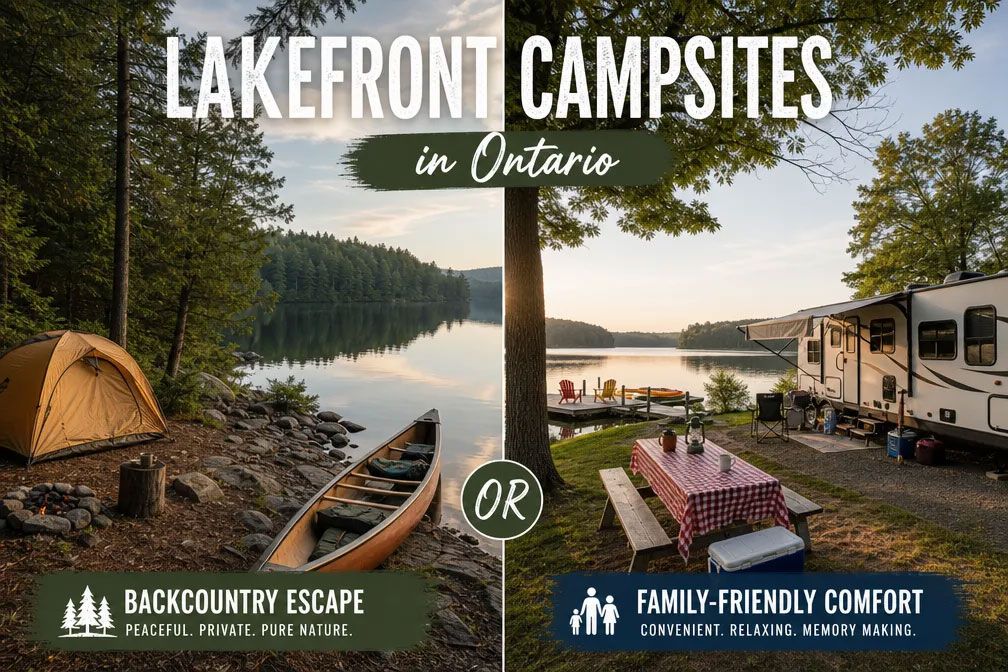
Ontario’s camping landscape splits into three main categories, each offering a different style of lakefront experience. Understanding these categories helps campers match their skill level and gear to the right destination.
Provincial Parks
Ontario Parks manages hundreds of campgrounds, many with direct lakefront sites. These are ideal for beginners and families because they include amenities like washrooms, potable water, and marked trails.
| Park | Region | Best For |
|---|---|---|
| Algonquin Provincial Park | Central Ontario | Canoe-in backcountry lakefront sites |
| Killarney Provincial Park | Northeastern Ontario | Rugged rock shoreline and clear lakes |
| Sandbanks Provincial Park | Eastern Ontario | Sandy beach camping on Lake Ontario |
| Pinery Provincial Park | Southwestern Ontario | Lake Huron beachfront drive-in sites |
| Quetico Provincial Park | Northwestern Ontario | Remote wilderness paddling routes |
Algonquin remains the most requested destination for canoe-in lakefront campsites in Ontario, partly because its interior lakes offer hundreds of individually spaced sites, each with its own private shoreline.
Crown Land
For campers comfortable with self-sufficiency, Crown land across Northern Ontario offers free lakefront camping with no reservation system. This option suits experienced backcountry travelers who bring their own navigation tools, water filtration, and bear-safe food storage. Crown land camping requires a valid license for non-residents in some cases, so checking current regulations before heading out is essential.
Private Campgrounds and Resorts
Private lakefront resorts near Muskoka, the Kawarthas, and Haliburton offer more amenities: docks, rental boats, showers, and sometimes cabins alongside tent sites. These work well for campers who want lakefront access with less planning and more comfort.
Top CampEscape Selections for Lakefront Campsites in Ontario
Based on shoreline quality, accessibility, and camper reviews, these stand out as the top picks for lakefront campsites in Ontario this season.
- Algonquin’s Canoe Lake Sites, Classic interior camping with granite shorelines and excellent swimming. Best reached by a short portage from the Canoe Lake access point.
- Killarney’s George Lake Campground, Turquoise water framed by white quartzite ridges. Drive-in access with select sites right on the shoreline.
- Sandbanks Outlet Beach Sites, Warm, shallow water and soft sand dunes make this ideal for families with young children.
- Grundy Lake Provincial Park, A smaller, less crowded park near Georgian Bay with calm bays perfect for kayaking.
- Restoule Provincial Park, Underrated shoreline camping on Stormy Lake with fewer crowds than Algonquin, yet similar scenery.
- Quetico’s Pickerel Lake Route, For experienced paddlers seeking true wilderness solitude and excellent fishing.
Each of these locations offers a distinct version of the same promise: waking up steps from calm water, with a canoe ready to launch before breakfast.
How to Book Lakefront Campsites in Ontario
Ontario Parks opens reservations five months in advance on a rolling basis through the Ontario Parks reservation system. Popular lakefront sites in Algonquin and Killarney often book out within hours of release, especially for long weekends in July and August.
Booking tips:
- Set a calendar reminder for the exact release date and time.
- Have backup lake and site numbers ready in case the first choice is gone.
- Consider weekday arrivals instead of Friday-to-Sunday stays for better availability.
- Look at shoulder-season dates in May, June, and September when demand drops but weather remains mild.
Packing and Planning for Lakefront Camping
Lakefront sites bring specific packing needs beyond a standard camping checklist. Moisture from the lake, changing winds, and wildlife near water sources all factor into a smooter trip.
- Waterproof tent footprint to handle damp ground near the shoreline.
- Dry bags for electronics and food during canoe transport.
- Bear-proof food storage since lakeside sites often attract more wildlife activity.
- Quick-dry towels and sandals for repeated swims and wet landings.
- Extra rope or paracord for securing canoes overnight against wind or wake.
Weather near open water can shift quickly. Checking marine or lake-specific forecasts, not just general regional forecasts, helps campers prepare for sudden wind changes that affect both comfort and canoe safety.
Conclusion
Lakefront campsites in Ontario offer something increasingly rare: direct, unfiltered access to clean freshwater surrounded by protected forest. From Algonquin’s quiet interior lakes to the sandy shores of Sandbanks, the province gives campers an unmatched range of choices for every skill level and comfort preference.
The next step is simple. Pick a target lake from the CampEscape selections above, check the Ontario Parks reservation calendar for release dates, and build a backup list of two or three alternative sites in case the first choice books out. Early planning, especially for peak summer weekends, remains the single biggest factor separating a smooth lakefront trip from a stressful scramble for space. Start the search now, and next season’s best lakefront memories are only a booking confirmation away.
