
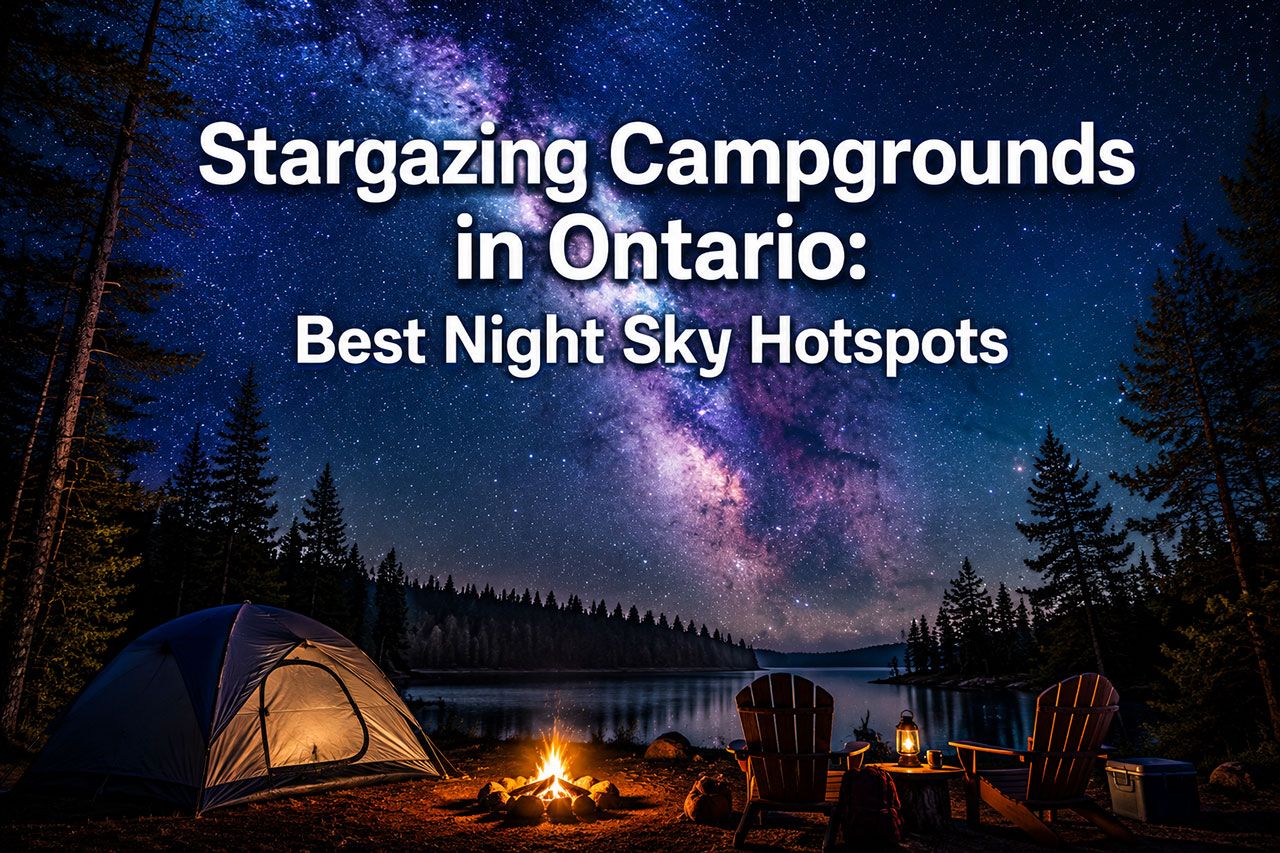
Ontario loses approximately $6.9 billion annually in energy costs due to light pollution, yet this same province harbors some of North America’s darkest skies. The contrast between urban sprawl and pristine wilderness creates unique opportunities for stargazers willing to venture beyond city limits. Finding the right stargazing campgrounds in Ontario transforms a simple camping trip into an astronomical adventure where the Milky Way stretches across the horizon like a cosmic river.
The province’s vast geography spans over one million square kilometers, offering everything from designated Dark Sky Preserves to remote backcountry sites where artificial light becomes a distant memory. Whether tracking meteor showers, photographing the aurora borealis, or simply marveling at thousands of visible stars, Ontario’s campgrounds provide front-row seats to celestial wonders that urban dwellers rarely experience.
Key Takeaways
- Ontario hosts multiple International Dark Sky Preserves with Bortle Scale ratings of 1-3, offering world-class stargazing conditions within driving distance of major cities
- Provincial parks like Killarney, Algonquin, and Bruce Peninsula combine excellent camping facilities with minimal light pollution for optimal night sky viewing
- Peak stargazing seasons run from late spring through early fall, with August offering the Perseid meteor shower and consistent clear weather patterns
- Proper equipment including red-light headlamps, star charts, and warm clothing significantly enhances the stargazing experience at Ontario campgrounds
- Booking campsites on new moon weekends maximizes star visibility by eliminating lunar interference
Understanding Ontario’s Dark Sky Geography
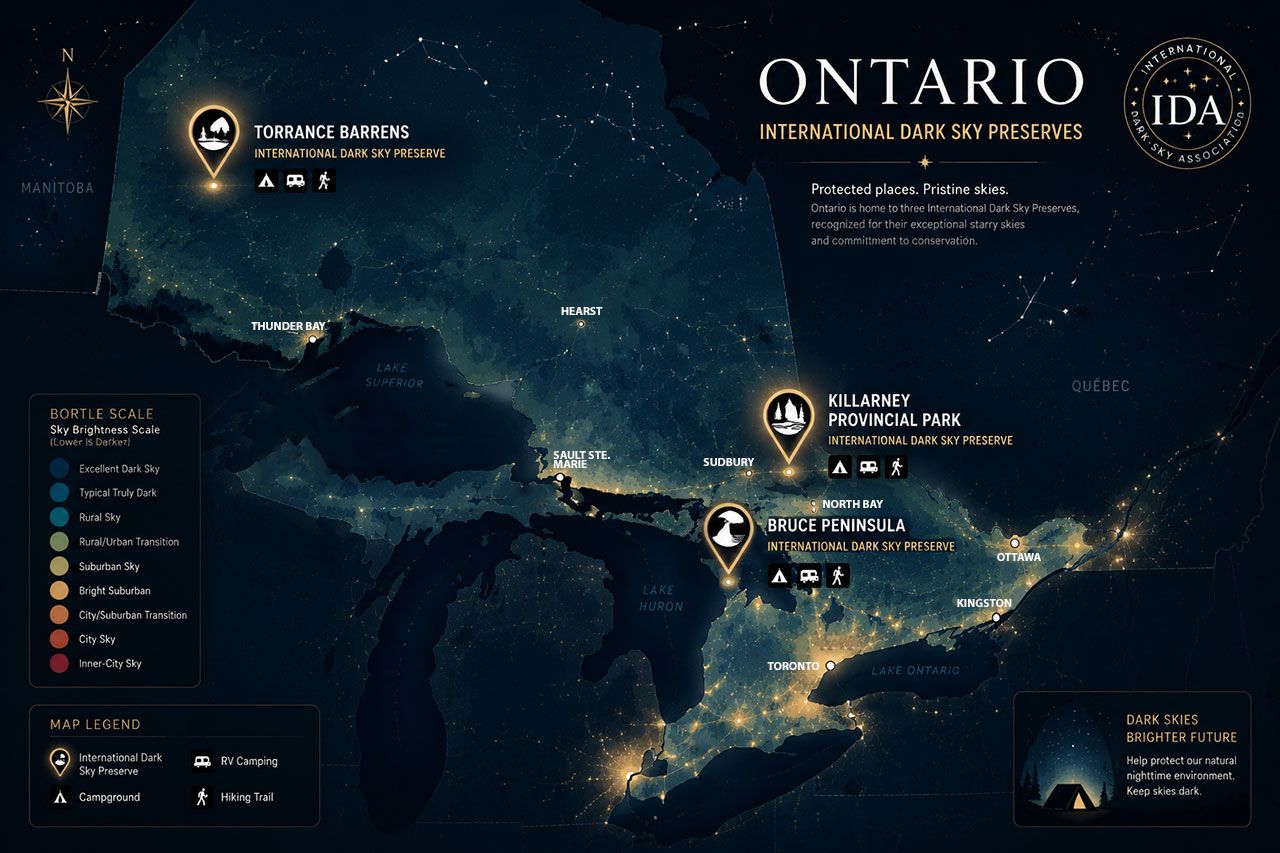
Light pollution from Toronto, Ottawa, and other urban centers creates a dome effect that extends 100-150 kilometers outward, making location selection critical for stargazing campgrounds in Ontario. The Bortle Scale, which measures night sky brightness from 1 (pristine) to 9 (inner-city), helps astronomers identify optimal viewing locations.
Northern Ontario generally offers Bortle Scale ratings between 1-3, where the Milky Way casts visible shadows and the zodiacal light becomes apparent. Southern Ontario campgrounds typically range from 3-5, still providing excellent viewing compared to urban areas but with some light dome interference on horizons.
International Dark Sky Preserves in Ontario
The Royal Astronomical Society of Canada has certified several Ontario locations as Dark Sky Preserves, recognizing their commitment to preserving natural darkness:
Torrance Barrens Dark Sky Reserve holds the distinction of being Canada’s first permanent Dark Sky Reserve. Located in Muskoka, this 4,600-acre site offers Bortle Scale 2 conditions during optimal weather. The exposed granite landscape provides unobstructed 360-degree views, though camping requires traveling to nearby provincial parks.
Bruce Peninsula National Park earned International Dark Sky Park designation in 2021, protecting 154 square kilometers of pristine night sky. The park’s Cyprus Lake campground places visitors within walking distance of exceptional stargazing locations along the Georgian Bay coastline.
Killarney Provincial Park combines stunning daytime landscapes with remarkable nighttime viewing. The park’s remote location on Georgian Bay’s northern shore and strict lighting policies maintain Bortle Scale 2-3 conditions across its 645 square kilometers.
Geographic Advantages of Northern Campgrounds
Latitude plays a significant role in celestial viewing opportunities. Ontario’s northern campgrounds between 46-51 degrees north latitude provide extended summer twilight but also offer better aurora borealis viewing than southern locations. The auroral oval typically centers around 67 degrees north, making northern Ontario campgrounds positioned favorably for geomagnetic storm viewing.
Elevation changes throughout Ontario remain relatively modest compared to western provinces, with most campgrounds situated between 200-500 meters above sea level. However, even minor elevation increases of 100-200 meters can reduce atmospheric interference and improve viewing clarity.
Top Stargazing Campgrounds in Ontario for 2026
Provincial parks dominate the list of premier stargazing destinations, combining protected dark skies with established camping infrastructure. These locations balance accessibility with astronomical quality, offering amenities while preserving the darkness essential for night sky observation.
Algonquin Provincial Park
As Ontario’s oldest provincial park, Algonquin spans 7,653 square kilometers of wilderness, providing numerous campground options with varying darkness levels. The park’s interior campsites accessed by canoe offer Bortle Scale 2 conditions, while drive-in campgrounds like Mew Lake and Pog Lake provide Bortle Scale 3-4 viewing.
Mew Lake Campground operates year-round and hosts regular astronomy events through partnerships with local astronomy clubs. The campground’s 131 sites include electrical hookups, making it suitable for astrophotography setups requiring power. The nearby Algonquin Visitor Centre occasionally hosts “Star Parties” with telescopes and expert guides.
Achray Campground on Algonquin’s eastern side offers darker skies than western campgrounds due to greater distance from Huntsville’s light dome. The 39-site campground provides access to Grand Lake’s shoreline, creating opportunities for reflection photography of star fields.
Lake Superior Provincial Park
Located along Lake Superior’s eastern shore, this 1,550-square-kilometer park combines dramatic landscapes with exceptional darkness. The park’s Rabbit Blanket Lake and Agawa Bay campgrounds offer Bortle Scale 2-3 conditions when weather cooperates.
The park’s northern location at 47 degrees latitude increases aurora viewing opportunities, particularly during solar maximum periods. The 2026 solar cycle peak makes this timing especially favorable for northern lights photography combined with stargazing.
Grundy Lake Provincial Park
Situated in the transition zone between southern and northern Ontario, Grundy Lake offers an accessible compromise for Toronto-area residents seeking dark skies without extensive travel. The park’s 485 campsites spread across multiple campgrounds, with the Gurd Lake area providing the darkest conditions.
The park maintains minimal lighting policies, using downward-facing fixtures and red-filtered lights near comfort stations. This commitment to darkness preservation earned recognition from astronomy organizations and makes it one of the best stargazing campgrounds in Ontario within three hours of Toronto.
Quetico Provincial Park
For wilderness enthusiasts willing to paddle for their darkness, Quetico delivers Bortle Scale 1 conditions across its 4,760 square kilometers of backcountry. This canoe-only park requires advance planning and wilderness skills but rewards visitors with some of Ontario’s darkest skies.
The park’s 2,000+ backcountry campsites ensure isolation from other groups. Summer nights remain short at this latitude, but the trade-off includes extended twilight photography opportunities and the midnight sun effect during late June.
Private Campgrounds and CampEscape Options
Beyond provincial parks, private campgrounds increasingly recognize the appeal of dark sky tourism. Several properties have implemented lighting controls and designated stargazing areas. Visitors can explore options through resources like CampEscape’s Ontario campground directory, which includes properties across various regions with different darkness levels.
Private campgrounds often provide additional amenities like heated facilities, WiFi for weather checking, and flexible booking policies. While they may not match provincial park darkness levels, many rural private campgrounds still offer Bortle Scale 4-5 conditions suitable for casual stargazing and meteor shower viewing.
Optimizing Your Stargazing Experience
Success at stargazing campgrounds in Ontario depends on preparation, timing, and technique. Understanding seasonal patterns, equipment needs, and viewing strategies transforms a good experience into an exceptional one.
Seasonal Considerations and Weather Patterns
Ontario’s continental climate creates distinct stargazing seasons with varying advantages:
Spring (April-May) offers comfortable temperatures and minimal insects, though weather remains unpredictable. The Milky Way’s galactic core rises in early morning hours, requiring dedication but rewarding early risers with spectacular views.
Summer (June-August) provides the most accessible viewing with warm temperatures and the Milky Way visible from dusk onward by mid-summer. The Perseid meteor shower peaks around August 12-13 annually, producing 60-100 meteors per hour under dark skies. However, summer also brings mosquitoes and occasional humidity that can reduce atmospheric clarity.
Fall (September-October) combines excellent weather stability with darker skies as daylight hours decrease. Cooler temperatures reduce atmospheric turbulence, improving viewing sharpness. The autumn Milky Way remains visible in evening hours, and aurora activity typically increases during equinox periods.
Winter offers the longest nights and clearest atmospheric conditions but requires serious cold-weather preparation. Only a few Ontario campgrounds remain open year-round, with Algonquin’s Mew Lake being the most accessible option for winter stargazing.
Moon Phase Planning
The moon’s brightness can overpower faint celestial objects, making lunar phase critical for planning trips to stargazing campgrounds in Ontario. New moon periods provide the darkest conditions, while full moon washes out all but the brightest stars.
A first-quarter moon sets around midnight, offering dark skies for late-night viewing. Last-quarter moon rises around midnight, providing dark evening hours. Most serious stargazers target the five-day window surrounding new moon for optimal viewing.
Essential Equipment and Preparation
Successful stargazing requires minimal equipment but benefits from thoughtful preparation:
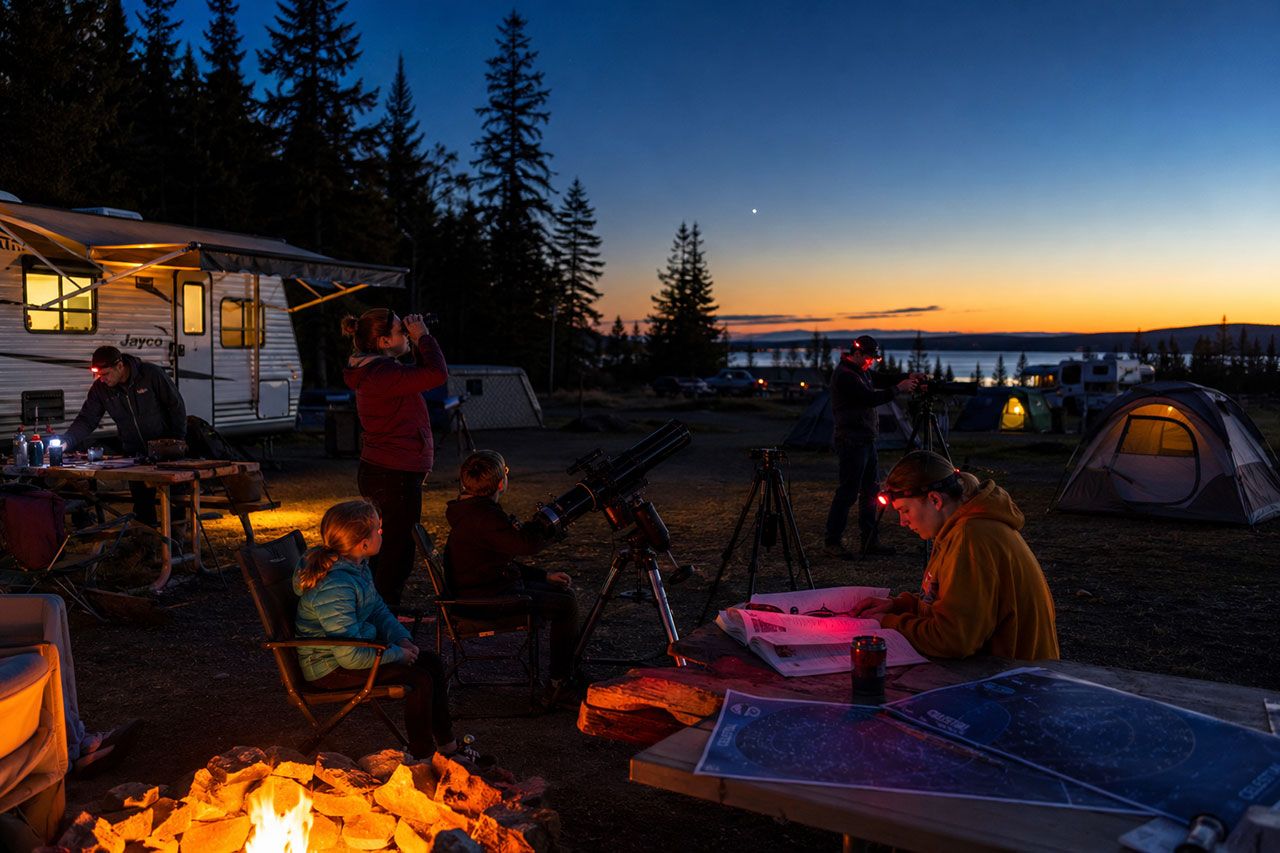
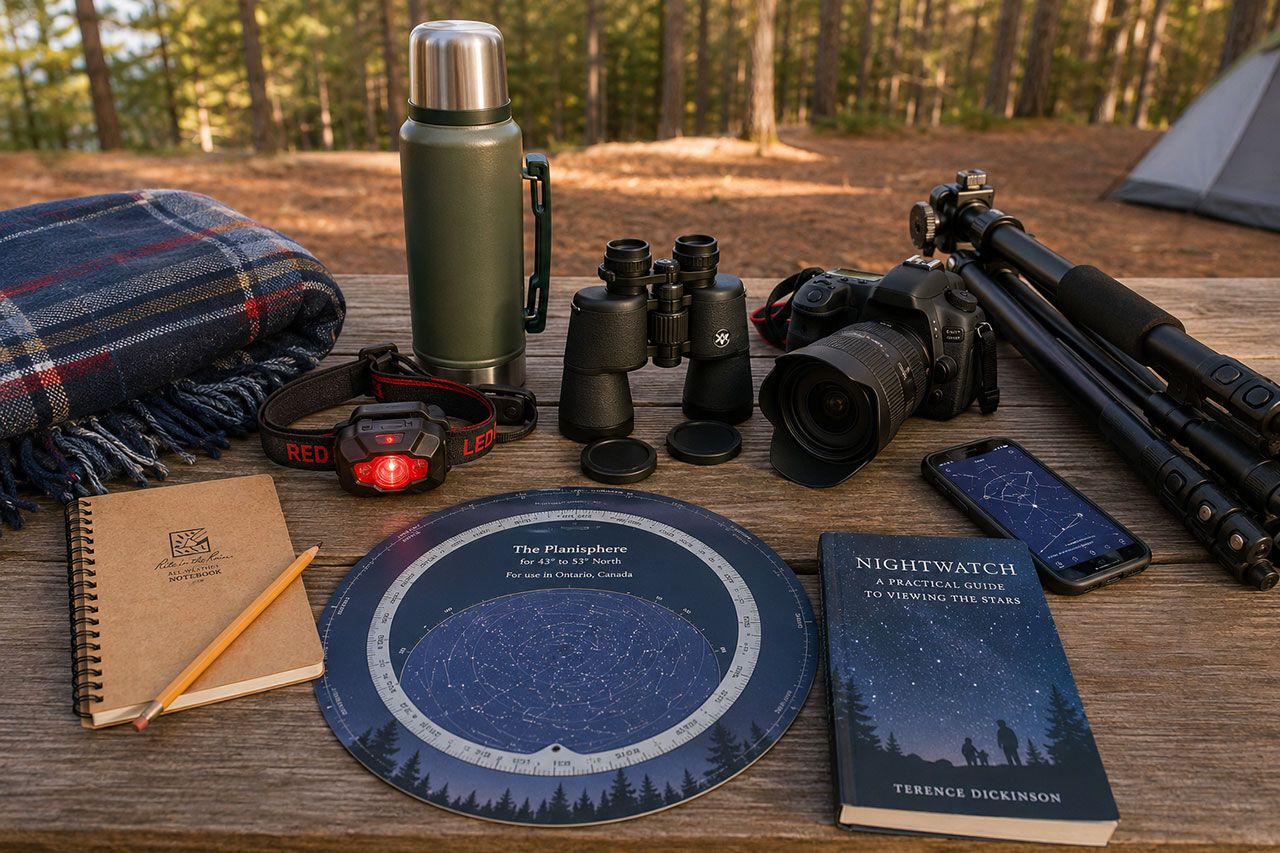
Red-light headlamps preserve night vision adaptation, which takes 20-30 minutes to develop fully. White light exposure resets this process, making red-filtered lighting essential for moving around campsites without compromising viewing.
Star charts and astronomy apps help identify constellations, planets, and deep-sky objects. Applications like SkySafari, Stellarium, or Star Walk provide real-time sky maps calibrated to specific locations. Paper planispheres work without battery concerns and function in extreme cold.
Binoculars (7×50 or 10×50) reveal thousands of additional stars, nebulae, and star clusters invisible to naked eyes. They’re more portable than telescopes and easier to use for beginners. Image-stabilized binoculars reduce shake for handheld viewing.
Warm clothing layers remain essential even during summer nights. Temperatures drop significantly after sunset, and stationary stargazing provides no body heat generation. Insulated sleeping bags or blankets transform viewing sessions from uncomfortable to enjoyable.
Reclining chairs or sleeping pads prevent neck strain during extended viewing sessions. Purpose-built astronomy chairs or zero-gravity loungers provide optimal viewing angles without discomfort.
Photography Considerations
Astrophotography at Ontario campgrounds ranges from simple smartphone captures to advanced DSLR techniques:
Smartphone photography has improved dramatically, with newer models featuring night modes capable of capturing the Milky Way. A stable tripod mount and 15-30 second exposures produce surprisingly good results.
DSLR setups require wide-angle lenses (14-24mm), sturdy tripods, and intervalometers for long exposures. Settings typically include ISO 3200-6400, f/2.8 or wider apertures, and 15-25 second exposures following the “500 rule” to prevent star trailing.
Time-lapse sequences capture sky rotation and meteor showers, requiring hundreds of exposures over several hours. Battery life becomes critical, making spare batteries and external power sources essential for cold weather shooting.
Etiquette and Conservation at Dark Sky Campgrounds
Preserving the darkness that makes stargazing campgrounds in Ontario special requires collective responsibility from all visitors. Light pollution prevention and respectful behavior ensure these resources remain available for future generations.
Lighting Best Practices
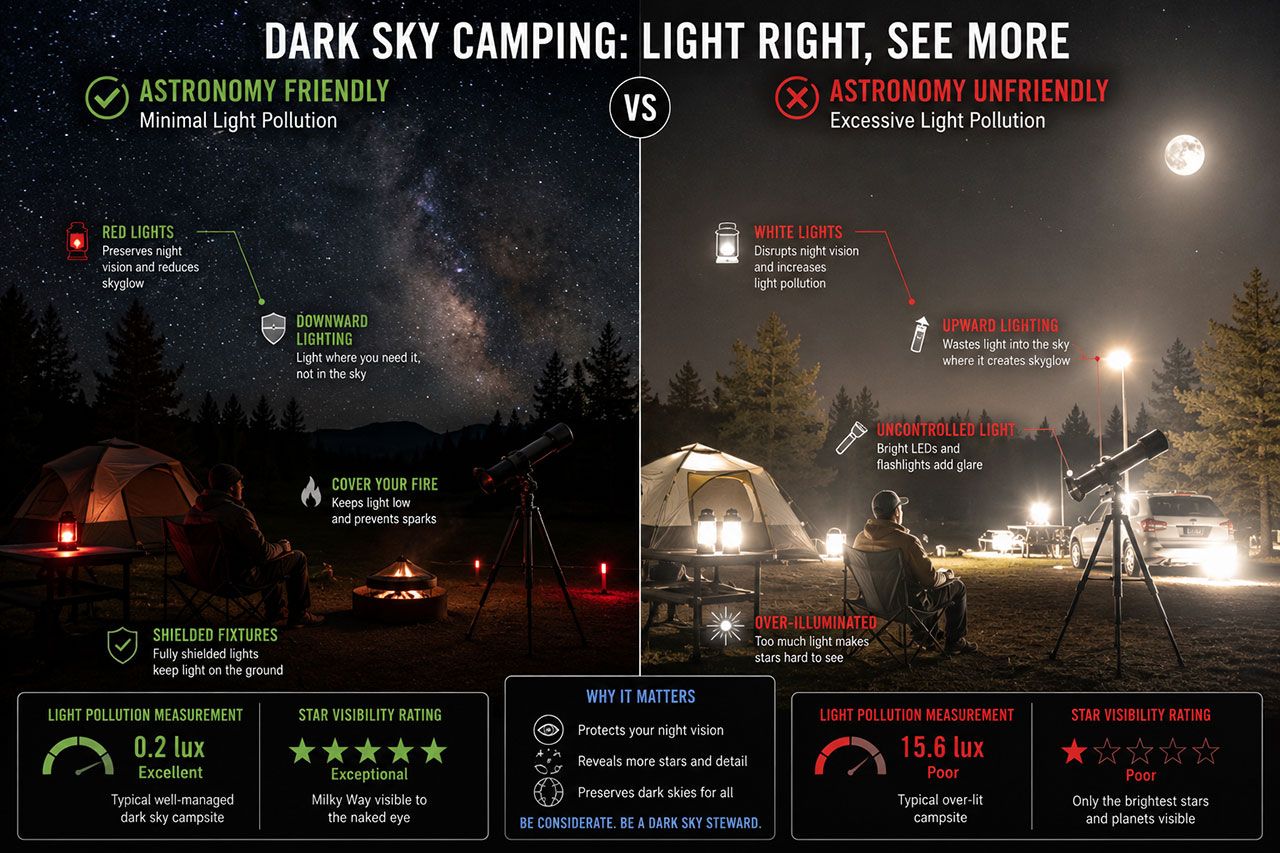
Minimize all artificial light after sunset. Use red-filtered lights exclusively, keeping them pointed downward and shielded. Cover campfires with screens when possible, as even natural firelight can interfere with night vision adaptation.
Shield vehicle headlights when arriving after dark by parking away from viewing areas or using parking lights only for final positioning. Turn off all vehicle interior lights and dashboard displays.
Close tent doors before turning on interior lights. Even brief white light exposure from an open tent can disrupt nearby stargazers’ night vision for 20-30 minutes.
Respecting Fellow Stargazers
Maintain quiet hours strictly, as sound travels extensively on clear nights. Conversations, music, and generator use should cease by designated quiet times, typically 11 PM in provincial parks.
Avoid light trespass by positioning lights so they don’t shine toward neighboring sites. Request the same courtesy from neighbors if necessary, approaching conversations with education rather than confrontation.
Share knowledge generously with curious campers. Pointing out constellations, planets, or the Milky Way to children and novices builds appreciation for dark sky preservation.
Leave No Trace Principles
Dark sky preservation extends beyond light pollution to overall environmental stewardship:
Pack out all waste including batteries, food scraps, and equipment packaging. Littering degrades the wilderness experience for all visitors.
Stay on designated trails when moving to viewing areas after dark. Trampling vegetation damages ecosystems and creates erosion issues.
Respect wildlife by maintaining distance and never feeding animals. Nocturnal species face particular disruption from human activity during their active hours.
Planning Your Stargazing Camping Trip
Successful trips to stargazing campgrounds in Ontario require advance planning, particularly during peak summer months when popular parks fill quickly.
Booking Strategies
Reserve early for summer weekends, especially around new moon dates and meteor showers. Ontario Parks’ reservation system opens five months in advance, with popular sites like Algonquin and Killarney filling within hours of opening.
Consider shoulder seasons for better availability and often superior viewing conditions. Late May and September offer excellent weather with fewer crowds and easier booking.
Check cancellation lists if your preferred dates show full availability. The Ontario Parks website updates availability as cancellations occur, and persistence often yields results.
Weather Monitoring
Track forecasts using multiple sources including Environment Canada, Clear Sky Chart (specifically designed for astronomers), and satellite imagery. Cloud cover predictions become critical for planning viewing sessions.
Have backup plans for cloudy nights, including alternative activities or flexibility to shift viewing to different evenings. Multi-night trips provide insurance against weather disappointments.
Understand regional patterns where certain areas like Lake Superior’s north shore experience different weather than southern Ontario due to lake effects and elevation changes.
Safety Considerations
Inform others of your plans, particularly for backcountry trips to remote stargazing locations. Cell service remains limited or absent in many of Ontario’s darkest areas.
Carry navigation tools including GPS devices, compasses, and detailed maps. Wandering away from campsites in darkness creates disorientation risks even for experienced outdoors enthusiasts.
Prepare for cold even during summer months. Hypothermia risk increases during stationary activities in cool temperatures, particularly with wind chill near large water bodies.
Wildlife awareness remains important, as nocturnal animals become active during stargazing hours. Proper food storage and awareness of surroundings prevent negative encounters.
Conclusion
Ontario’s diverse landscape offers exceptional opportunities for stargazers willing to venture beyond urban light pollution. From the internationally recognized Dark Sky Preserves of Torrance Barrens and Bruce Peninsula to the remote wilderness of Quetico and Algonquin’s interior, stargazing campgrounds in Ontario provide access to celestial wonders that inspire awe and perspective.
The 2026 solar maximum creates particularly favorable conditions for aurora viewing at northern campgrounds, while consistent meteor showers and Milky Way visibility reward visitors throughout the warmer months. Success requires planning around moon phases, weather patterns, and seasonal considerations, but the effort yields experiences that reconnect visitors with the natural universe often hidden by modern lighting.
Start by selecting a campground matching your experience level and darkness preferences. Book early for peak periods, particularly around new moon weekends and major meteor showers. Prepare appropriate equipment including red lights, warm clothing, and star charts. Most importantly, commit to preserving the darkness through responsible lighting practices and environmental stewardship.
Whether you’re a serious astrophotographer seeking Bortle Scale 1 conditions or a family wanting to show children the Milky Way for the first time, Ontario’s stargazing campgrounds deliver experiences that transform our understanding of our place in the cosmos. The stars await—you just need to escape the city lights and look up.
Explore campground options across Ontario through resources like CampEscape to find the perfect dark sky destination for your next astronomical adventure.
