
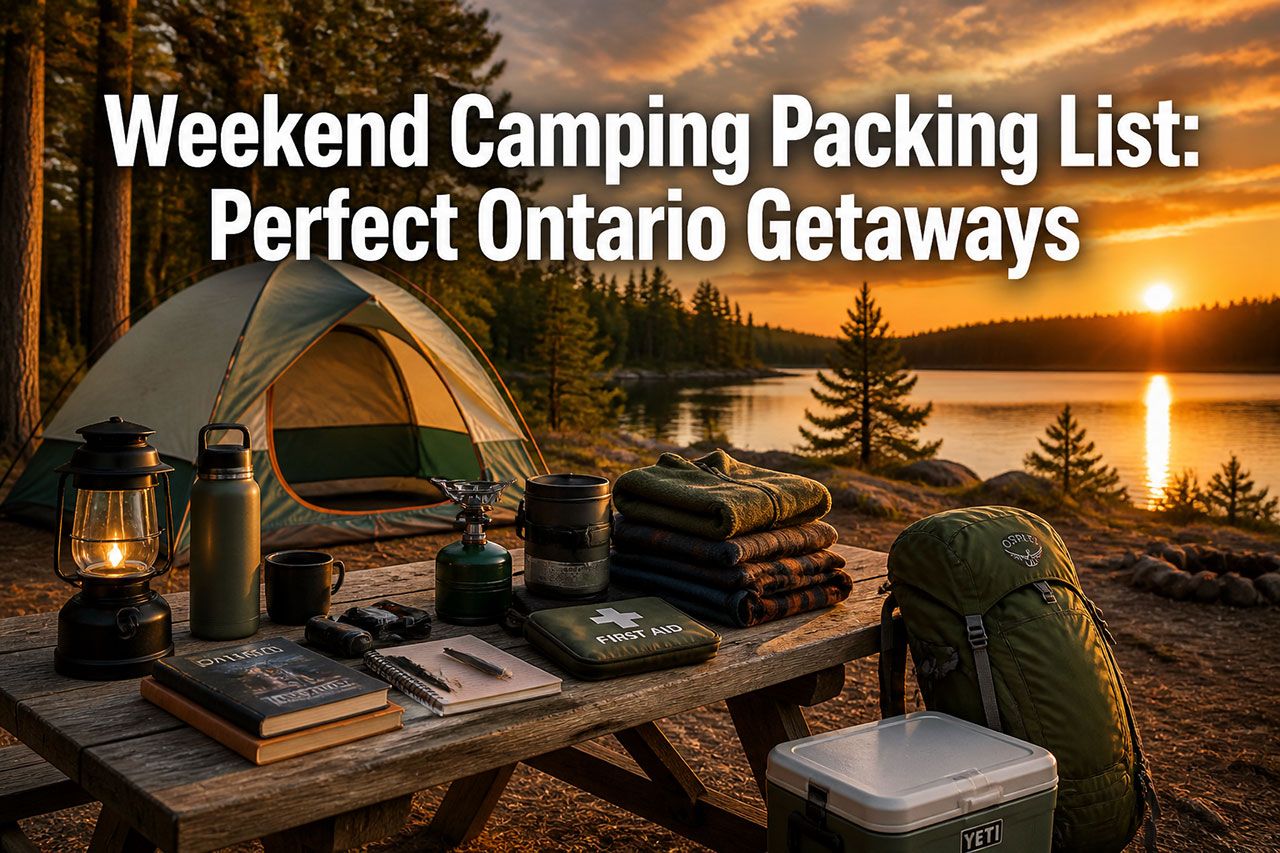
A comprehensive camping packing list for Ontario getaways includes shelter (tent, sleeping bag, sleeping pad), cooking equipment (stove, cookware, cooler), clothing layers for variable weather, safety gear (first aid kit, navigation tools), and campsite essentials (chairs, lighting, fire starters). Ontario campers should prepare for temperature swings of 15-20°C between day and night, pack bear-safe food storage, and bring bug protection for spring through fall camping seasons.
Key Takeaways
- Shelter basics: Four-season tent, temperature-rated sleeping bag, insulated sleeping pad, and ground tarp protect against Ontario’s variable weather conditions
- Cooking essentials: Portable camp stove, fuel, cookware set, cooler with ice, and bear-proof food containers are mandatory for most Ontario provincial parks
- Clothing strategy: Layer system with moisture-wicking base, insulating mid-layer, and waterproof outer shell adapts to Ontario’s unpredictable weather
- Safety gear: First aid kit, navigation tools, headlamp with extra batteries, and emergency whistle should never be left behind
- Seasonal adjustments: Summer camping requires bug spray and sun protection, while fall camping demands warmer sleeping bags and thermal layers
- Food storage rules: Ontario parks enforce strict bear-safe storage; bring rope for hanging food or use provided lockers
- Water management: Portable water filter or purification tablets extend camping range beyond serviced sites
- Leave No Trace: Pack garbage bags, biodegradable soap, and plan to carry out everything you bring in
What Should Be on Your Ontario Camping Packing List?
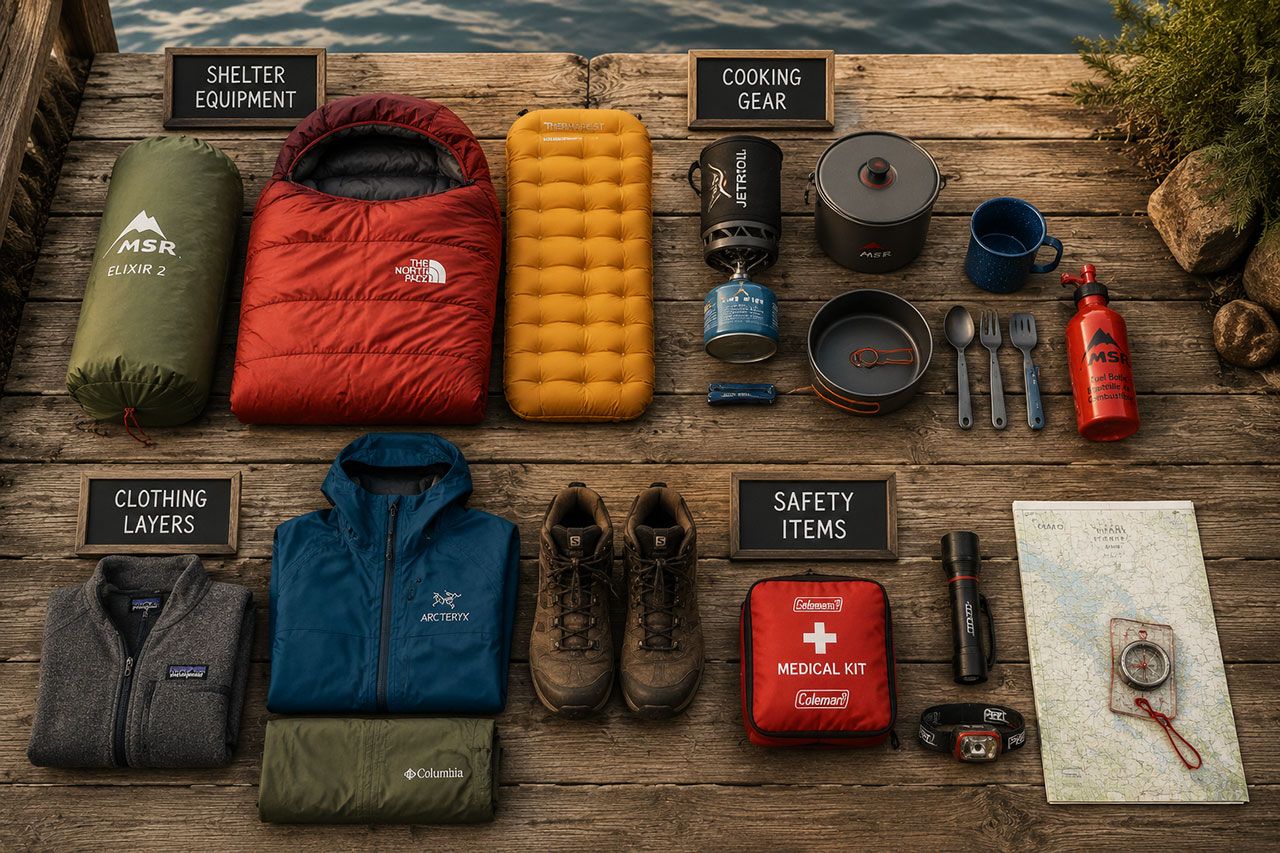
A proper camping packing list for Ontario camping breaks down into six core categories: shelter, sleep system, cooking gear, clothing, safety equipment, and campsite comfort items. Ontario’s diverse landscapes—from Algonquin Park’s backcountry to Lake Superior’s rocky shores—demand gear that handles humidity, temperature swings, and sudden weather changes.
Shelter and Sleep System:
- Tent sized for your group plus gear storage (add one person capacity for comfort)
- Ground tarp or footprint to protect tent floor from rocks and moisture
- Sleeping bag rated 5-10°C below expected nighttime lows
- Sleeping pad with R-value of 2.5+ for spring/fall, 1.5+ for summer
- Camping pillow or stuff sack filled with soft clothing
- Tent repair kit with extra stakes and guylines
Cooking and Food Storage:
- Portable camp stove with sufficient fuel (propane or white gas)
- Lighter or waterproof matches in sealed container
- Cookware set: pot, pan, cooking utensils
- Plates, bowls, cups, and eating utensils for each camper
- Cooler with ice or ice packs (hard-sided for bear country)
- Bear-proof food container or rope for hanging (required in many Ontario parks)
- Dish soap (biodegradable), sponge, and drying towel
- Coffee maker or kettle for hot drinks
- Can opener and sharp knife
Common mistake: Bringing a sleeping bag rated for the daytime high temperature instead of nighttime lows. Ontario nights drop significantly, even in summer.
How Do You Pack Clothing for Ontario Camping?
Ontario camping clothing follows a three-layer system that adapts to temperatures ranging from 5°C spring mornings to 30°C summer afternoons. Pack for the specific season and check weather forecasts for the week before departure, but always bring one extra warm layer beyond what seems necessary.
Base Layer (moisture-wicking):
- 2-3 synthetic or merino wool t-shirts
- 1-2 long-sleeve shirts for sun and bug protection
- 2-3 pairs underwear
- 2-3 pairs wool or synthetic socks
- Long underwear for spring and fall camping
Mid Layer (insulation):
- Fleece jacket or synthetic puffy jacket
- Long pants (quick-dry hiking pants work year-round)
- Shorts for summer camping
Outer Layer (weather protection):
- Waterproof rain jacket with hood
- Rain pants (especially important for canoe camping)
- Windbreaker for cooler evenings
- Wide-brimmed hat for sun protection
- Warm beanie for cool mornings and evenings
Footwear:
- Broken-in hiking boots or trail shoes
- Camp shoes or sandals for around the campsite
- Extra pair of socks kept dry in tent
Choose lightweight, quick-dry fabrics if: You’re canoe camping or backpacking where weight matters and laundry facilities aren’t available.
Choose cotton comfort clothes if: You’re car camping at a serviced site with easy access to dry storage and won’t be far from your vehicle.
What Safety and Navigation Gear Is Essential for Ontario Camping?
Safety equipment for Ontario camping includes first aid supplies, navigation tools, emergency communication, and items specific to wildlife encounters. Provincial parks require certain safety gear, and backcountry camping adds additional requirements.
First Aid and Health:
- Comprehensive first aid kit with bandages, gauze, tape, antiseptic
- Personal medications (bring extra days’ supply)
- Pain relievers and anti-inflammatory medication
- Antihistamine for allergic reactions
- Tweezers for splinters and tick removal
- Sunscreen (SPF 30+) and lip balm
- Insect repellent with DEET or icaridin (30%+ concentration)
- After-bite treatment for bug bites
Navigation and Communication:
- Detailed map of the area (waterproof or in protective case)
- Compass (know how to use it before departure)
- GPS device or smartphone with downloaded offline maps
- Whistle for emergency signaling
- Fully charged power bank for devices
- Emergency contact information for park rangers
Lighting:
- Headlamp with extra batteries (hands-free lighting is essential)
- Backup flashlight
- Lantern for campsite lighting
- Glow sticks for marking tent lines at night
Wildlife Safety:
- Bear spray (required for backcountry camping in many areas)
- Knowledge of proper food storage techniques
- Rope for hanging food (50 feet of paracord minimum)
- Whistle and noisemakers for trail hiking
Edge case: If camping during hunting season (typically fall), bring and wear bright orange or red clothing when hiking trails.
What Cooking Equipment Makes Ontario Camping Meals Easy?
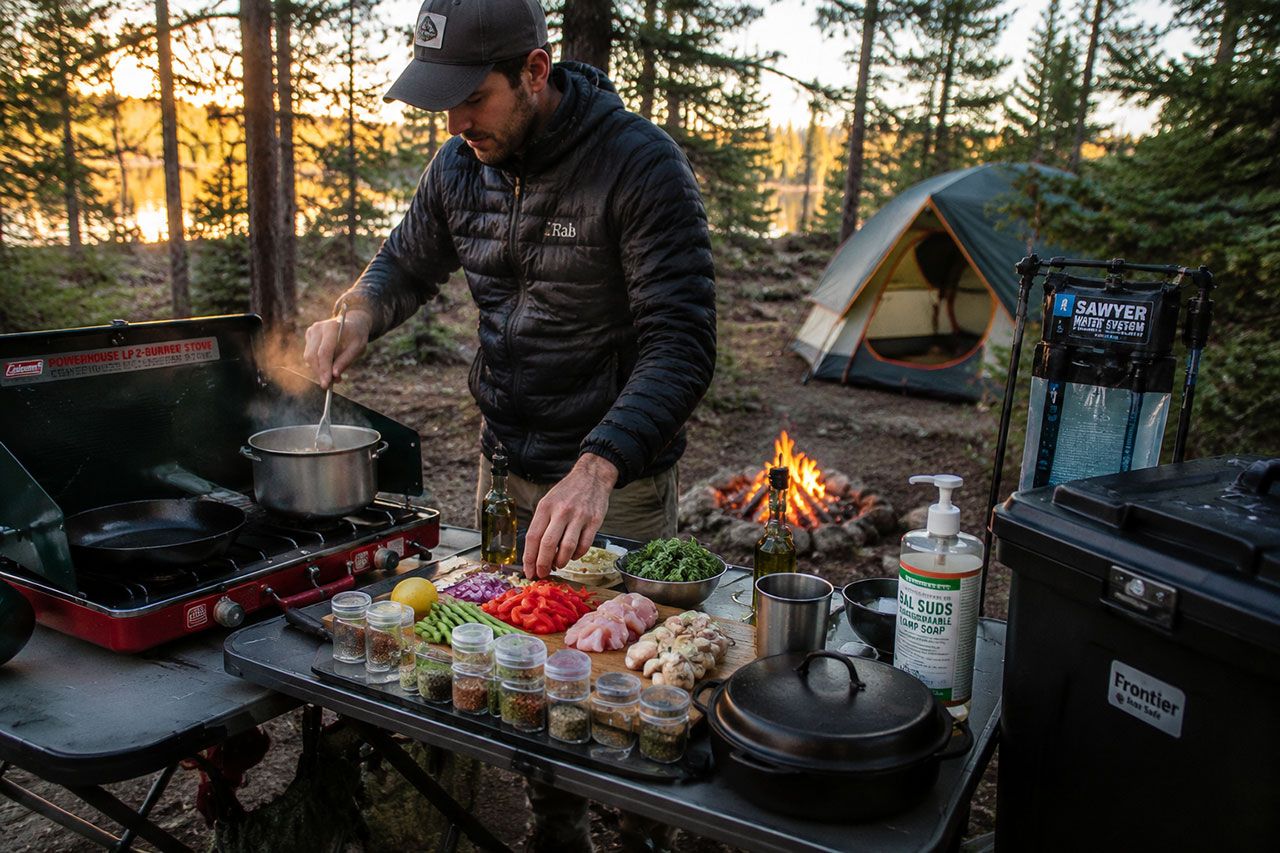
A well-organized camp kitchen transforms camping meals from survival food to enjoyable dining experiences. Ontario campers who cook regularly at their sites need equipment that balances portability, durability, and functionality.
Essential Cooking Gear:
- Two-burner camp stove for car camping (single burner for backpacking)
- Fuel appropriate for your stove type (check airline restrictions if flying)
- Windscreen for stove efficiency
- Cast iron skillet or non-stick camping pan
- Medium pot with lid for boiling water and cooking
- Kettle for coffee and hot drinks
- Long-handled spatula and cooking spoon
- Sharp knife and cutting board
- Aluminum foil for cooking and cleanup
Food Prep and Storage:
- Cooler management: separate coolers for drinks (opened frequently) and food (opened less)
- Frozen water bottles serve as ice packs and drinking water as they melt
- Pre-cut vegetables and pre-marinated proteins at home save time and space
- Dry goods in sealed containers prevent moisture and wildlife access
- Spice kit with salt, pepper, oil, and favorite seasonings
Cleanup System:
- Two wash bins (one for washing, one for rinsing)
- Biodegradable soap used 200 feet from water sources
- Scrub brush or sponge
- Quick-dry towels
- Garbage bags for waste (pack out everything)
- Ziploc bags for dirty dishes if breaking camp before washing
Choose a full kitchen setup if: You’re car camping for multiple nights and enjoy cooking as part of the camping experience.
Choose minimal cooking gear if: You’re doing short overnight trips, backpacking, or prefer simple meals like sandwiches and pre-made foods.
What Campsite Comfort Items Enhance Your Ontario Camping Experience?
Comfort items transform a basic camping trip into a memorable getaway without adding excessive weight or complexity. These items aren’t survival-critical but significantly improve quality of life at the campsite.
Seating and Relaxation:
- Camping chairs (one per person minimum)
- Portable camping table for food prep and dining
- Hammock for afternoon relaxation
- Camp blanket or outdoor mat for sitting on ground
Fire and Ambiance:
- Firewood (purchased locally to prevent spreading invasive species)
- Fire starters (commercial or homemade)
- Waterproof matches or lighter
- Roasting sticks for marshmallows
- Portable fire pit if ground fires aren’t permitted
Entertainment:
- Playing cards or travel games
- Books or e-reader
- Binoculars for wildlife watching
- Fishing gear (with valid Ontario fishing license)
- Camera for capturing memories
Hygiene and Sanitation:
- Toilet paper and trowel for backcountry camping
- Hand sanitizer
- Wet wipes for quick cleanup
- Toothbrush, toothpaste, and biodegradable soap
- Quick-dry towel
- Portable camp shower for longer trips
Common mistake: Bringing too many electronic entertainment devices. Ontario’s natural beauty provides the best entertainment, and excessive screen time defeats the purpose of camping.
How Should You Organize Your Camping Packing List by Season?
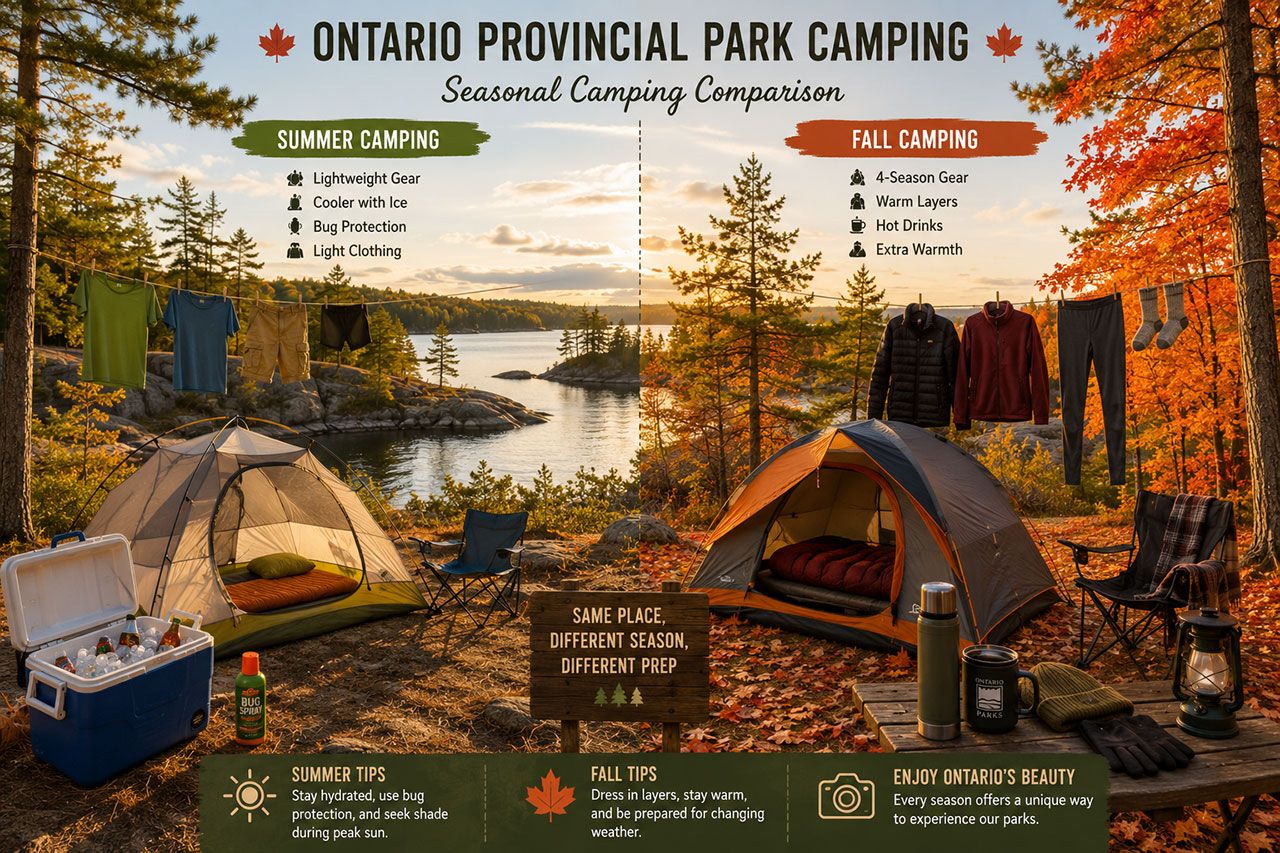
Ontario camping seasons demand different gear priorities. Spring camping (April-May) battles mud and bugs, summer camping (June-August) requires sun and heat management, and fall camping (September-October) needs extra warmth and rain protection.
Spring Camping Additions (April-May)
- Extra tarps for muddy conditions
- Waterproof boots with good traction
- Bug head net for blackfly season
- Warmer sleeping bag (0°C to -5°C rating)
- Extra fuel for heating water and cooking
- Moisture-wicking base layers
Summer Camping Essentials (June-August)
- Lightweight, breathable tent with good ventilation
- Sleeping bag liner or light summer bag (10°C+ rating)
- Sun hat and sunglasses
- Cooling towel
- Extra water containers (2-3 liters per person daily)
- Swimsuit and water shoes
- Screen house for bug-free dining
Fall Camping Priorities (September-October)
- Four-season tent or tent with rainfly
- Cold-weather sleeping bag (-5°C to -10°C rating)
- Insulated sleeping pad (R-value 3.5+)
- Thermal underwear and extra fleece layers
- Warm gloves and beanie
- Hot water bottle for sleeping bag
- Thermos for hot drinks throughout the day
Decision rule: If nighttime temperatures drop below 5°C, upgrade to a three-season or four-season sleeping bag and add thermal layers regardless of daytime warmth.
What Are the Best Ontario Camping Destinations for Weekend Getaways?
Ontario offers diverse camping experiences within 2-4 hours of major cities, making weekend getaways accessible for tent camping enthusiasts. Each region provides unique landscapes and camping styles.
Algonquin Provincial Park (Central Ontario)
- 2,400 square kilometers of wilderness
- 1,200+ lakes and 2,000+ campsites
- Best for: Canoe camping, backcountry hiking, wildlife viewing
- Peak season: July-August (book months ahead)
- Shoulder season advantages: September offers fall colors with fewer crowds
Bruce Peninsula National Park (Georgian Bay)
- Dramatic limestone cliffs and turquoise waters
- Cyprus Lake Campground as base for hiking
- Best for: Cliff-top hiking, swimming in clear waters, exploring caves
- Challenge: Rocky terrain requires sturdy footwear
Killarney Provincial Park (Northern Ontario)
- White quartzite ridges and pink granite shores
- Remote backcountry camping
- Best for: Experienced campers seeking solitude
- Note: No electrical hookups; true wilderness experience
Bon Echo Provincial Park (Eastern Ontario)
- Massive 100-meter cliff face rising from Mazinaw Lake
- Pictographs and rock climbing
- Best for: Families, first-time campers, water activities
- Accessibility: Car camping with some amenities
Sandbanks Provincial Park (Lake Ontario)
- Largest freshwater sand dunes in the world
- Warm, shallow beaches perfect for families
- Best for: Beach camping, swimming, sandcastle building
- Booking: Reserve early; extremely popular in summer
Find detailed information and booking for these and other Ontario camping destinations at https://campescape.ca/
What Common Mistakes Should Ontario Campers Avoid?
Learning from common camping mistakes saves money, improves safety, and enhances enjoyment. These errors appear repeatedly among both new and experienced Ontario campers.
Gear and Packing Mistakes:
- Failing to test gear before the trip (set up tent at home first)
- Overpacking clothing but underpacking warm layers
- Forgetting tent stakes or guylines (check before leaving)
- Not waterproofing gear or storing items in dry bags
- Bringing cotton clothing that stays wet and cold
Food and Cooking Errors:
- Insufficient food quantities (plan 2,500-3,000 calories per person daily)
- Forgetting cooking oil, salt, or basic seasonings
- Not pre-planning meals (leads to food waste and poor nutrition)
- Improper food storage attracting wildlife
- Bringing glass containers that break easily
Campsite Setup Problems:
- Choosing low-lying areas that flood during rain
- Setting up tent under dead trees or branches (“widow makers”)
- Pitching tent on roots or rocks (uncomfortable sleeping)
- Not creating proper drainage around tent
- Placing cooking area too close to sleeping area (attracts animals)
Safety and Etiquette Oversights:
- Not checking park-specific regulations before arrival
- Forgetting to purchase park permits or fishing licenses
- Playing loud music (violates quiet hours and disturbs wildlife)
- Not properly extinguishing campfires
- Leaving garbage or food scraps (attracts bears and raccoons)
Edge case: If camping during a heat advisory, bring extra water and electrolyte supplements. Dehydration happens faster than most campers expect, especially when hiking.
How Do You Create a Customized Camping Packing List?
A personalized camping packing list accounts for trip length, camping style, group size, and individual needs. Start with a master list and modify based on specific trip parameters.
Step 1: Define Trip Parameters
- Duration: overnight, weekend (2-3 nights), or extended (4+ nights)
- Camping style: car camping, backcountry, canoe camping, or RV support
- Season and expected weather conditions
- Number of people and their ages/abilities
- Activities planned: hiking, fishing, swimming, photography
Step 2: Build Category Checklists
Create separate lists for:
- Shelter and sleep
- Clothing and footwear
- Cooking and food
- Safety and first aid
- Hygiene and sanitation
- Entertainment and comfort
- Tools and repair items
Step 3: Assign Responsibility
For group camping, divide gear responsibility:
- Shared items: tent, cooking equipment, first aid kit
- Personal items: sleeping bag, clothing, toiletries
- Specialty items: fishing gear, camera equipment, games
Step 4: Do a Pre-Trip Check
- Lay out all gear 2-3 days before departure
- Check batteries, fuel levels, and expiration dates
- Test equipment (stove ignition, tent zippers, flashlights)
- Verify reservations and permits
- Check weather forecast and adjust clothing accordingly
Step 5: Post-Trip Review
After each trip, note:
- Items never used (consider leaving home next time)
- Items wished you had brought
- Gear that failed or needs replacement
- Quantities that were insufficient or excessive
Choose digital list management if: You camp frequently and want to maintain multiple trip-type templates that sync across devices.
Choose paper checklists if: You prefer physical checking-off items and want a backup that doesn’t require battery power.
Frequently Asked Questions
What is the most important item on a camping packing list?
A properly rated sleeping bag is the most critical item for Ontario camping. Cold, sleepless nights ruin trips faster than any other equipment failure. Choose a bag rated 5-10°C below expected nighttime lows.
How much does a complete camping setup cost for Ontario camping?
A quality starter camping setup costs $400-$800 for tent, sleeping bags, sleeping pads, and basic cooking gear. Budget options exist for $200-$300, while premium gear exceeds $1,500. Used equipment from outdoor retailers reduces initial investment.
Do you need bear-proof containers for all Ontario camping?
Most Ontario provincial parks require proper food storage, but methods vary. Algonquin and northern parks mandate bear-proof containers or hanging food. Southern parks often provide metal lockers. Check specific park regulations before arrival.
What clothing mistakes do Ontario campers make most often?
Wearing cotton clothing is the biggest mistake. Cotton absorbs moisture and loses insulating properties when wet. Choose synthetic or merino wool materials that wick moisture and dry quickly, even in Ontario’s humid conditions.
How do you pack a cooler for maximum ice retention?
Pre-chill the cooler and contents, use block ice instead of cubes, maintain a 2:1 ice-to-food ratio, keep the cooler in shade, minimize opening frequency, and drain meltwater daily. Frozen water bottles work excellently as ice packs.
What food should you avoid bringing camping in Ontario?
Avoid strongly scented foods (bacon, fish, aromatic cheeses) in bear country, glass containers that break, fresh produce that bruises easily, and anything requiring precise temperature control. Choose sealed, durable packaging.
How many days of clothing should you pack for a weekend camping trip?
Pack 2-3 sets of base layers plus one extra warm layer for a weekend trip. The layering system allows mixing and matching. Bring one extra pair of socks and underwear beyond what seems necessary.
Do you need a camping permit for Ontario provincial parks?
Yes, Ontario provincial parks require daily vehicle permits plus camping fees. Backcountry camping requires additional backcountry permits. Purchase permits online before arrival or at park gates (subject to availability).
What is the best tent size for Ontario camping?
Choose a tent rated for one more person than will actually sleep in it. A four-person tent comfortably sleeps three adults with gear. Ontario’s variable weather makes vestibule space for gear storage valuable.
How do you keep bugs away while camping in Ontario?
Use insect repellent with 30%+ DEET or icaridin, wear long sleeves and pants during dawn and dusk, choose campsites away from standing water, use a screen house for dining, and keep tent doors zipped at all times.
What should be in a camping first aid kit for Ontario?
Include adhesive bandages, gauze pads, medical tape, antiseptic wipes, pain relievers, antihistamines, tweezers, scissors, tensor bandage, blister treatment, and any personal medications. Add tick removal tool and after-bite treatment for Ontario-specific needs.
Can you drink water from Ontario lakes while camping?
Never drink untreated water from lakes or streams. Ontario waters may contain Giardia and other pathogens. Use a portable water filter, purification tablets, or boil water for one minute before drinking.
Conclusion
A comprehensive camping packing list transforms Ontario weekend getaways from stressful scrambles into smooth, enjoyable experiences. The key lies in systematic organization across six core categories: shelter, clothing, cooking, safety, comfort, and seasonal adaptations. Ontario’s diverse landscapes and variable weather demand flexible packing strategies that account for temperature swings, wildlife encounters, and changing conditions.
Start with the essential shelter and sleep system, build a three-layer clothing approach, pack proper cooking equipment and food storage, never compromise on safety gear, and add comfort items that enhance rather than burden your trip. Test all equipment before departure, customize lists based on trip parameters, and learn from each camping experience to refine future packing.
Take action now:
- Create your master camping packing list using the categories outlined in this guide
- Inventory your current gear and identify gaps
- Test equipment at home before your first trip
- Book your Ontario camping getaway at https://campescape.ca/
- Start with established campgrounds before attempting backcountry adventures
- Review and update your list after each camping trip
Ontario’s provincial parks, wilderness areas, and natural beauty await. With a well-organized camping packing list, weekend getaways become opportunities for rejuvenation, adventure, and connection with nature. The preparation you invest today ensures countless memorable camping experiences across Ontario’s remarkable landscapes.
