
Algonquin Park offers over 1,200 campsites across eight developed campgrounds along the Highway 60 corridor, plus 2,000+ backcountry sites accessible by canoe or hiking trails. Families typically choose car-accessible campgrounds like Mew Lake or Pog Lake for amenities and convenience, while experienced campers venture into the backcountry for solitude and wilderness immersion. Reservations open in January for the May-October season and fill quickly for summer weekends.
Key Takeaways
- Eight developed campgrounds line the Highway 60 corridor with electrical hookups, showers, and flush toilets at select locations
- Backcountry camping requires permits and offers 2,000+ remote sites across 2,400+ kilometers of canoe routes and hiking trails
- Reservation system opens in January; book 5 months ahead for July-August weekends
- Mew Lake stays open year-round and offers winter camping with heated facilities
- Pet-friendly sites available at most campgrounds, but pets prohibited on backcountry trails
- Bear safety is mandatory—use provided food lockers and never store food in tents
- Cell service is limited or nonexistent throughout most of the park
- Costs range from $46-$56 per night for car camping, $14 per person for backcountry sites (2026 rates)
What Campgrounds Are Available in Algonquin Park?
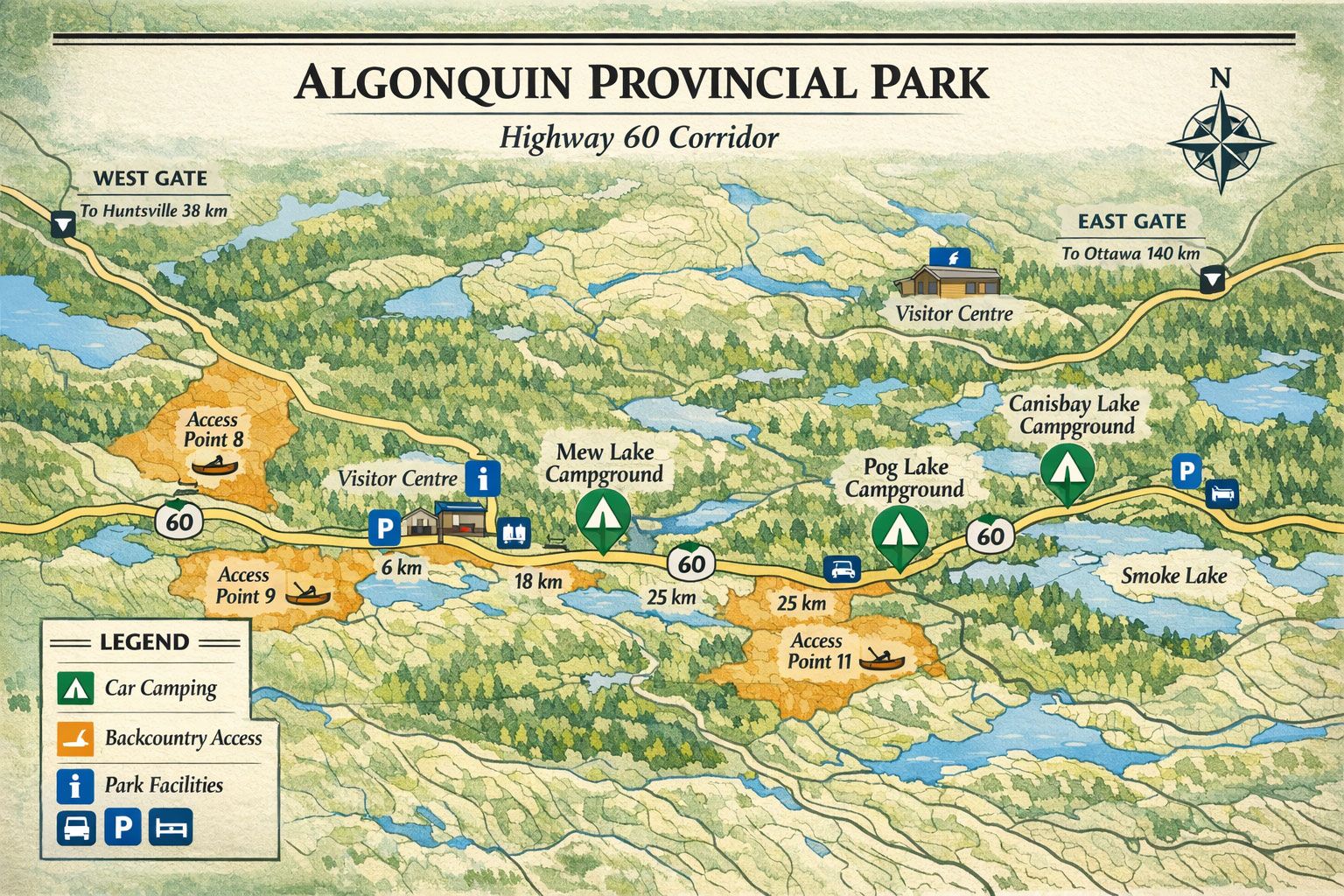
Algonquin Park operates eight car-accessible campgrounds along the 56-kilometer Highway 60 corridor, each offering different amenities and experiences. These campgrounds provide 1,248 sites total, ranging from basic tent sites to locations with electrical hookups suitable for RVs.
Developed Campgrounds (West to East):
- Canisbay Lake: 242 sites, radio-free, flush toilets, showers, boat launch
- Mew Lake: 131 sites, open year-round, electrical sites available, heated comfort stations in winter
- Tea Lake: 42 sites, smaller and quieter, basic facilities, no showers
- Coon Lake: 50 sites, group camping focus, basic amenities
- Pog Lake: 281 sites, largest campground, full facilities, swimming beach
- Whitefish Lake: 75 sites, group camping area, basic facilities
- Kearney Lake: 103 sites, quieter location, flush toilets, showers
- Rock Lake: 124 sites, eastern entrance, boat launch, full facilities
Choose a developed campground if you’re camping with young children, need vehicle access to gear, want hot showers and flush toilets, or plan to explore Highway 60 attractions like the Visitor Centre and hiking trails.
Common mistake: Assuming all campgrounds have electrical hookups. Only Mew Lake offers electrical sites (about 30% of its sites), making it the top choice for RV campers needing power.
How Do Algonquin Park Backcountry Campsites Work?
Backcountry camping in Algonquin Park requires a permit and involves paddling or hiking to remote, designated campsites scattered across the park’s interior. These 2,000+ sites accommodate 1-9 people and feature only a fire pit, thunderbox (outdoor toilet), and tent clearing.
Backcountry Access Points:
- Canoe routes: 29 access points with routes ranging from 6 km to multi-day expeditions
- Hiking trails: Western Uplands Trail (32 km loop), Highland Trail (35 km loop), and Eastern Pines Trail (15 km loop)
- Winter routes: Snowshoe and cross-country ski trails with winter camping sites
Permit Requirements:
- Book through Ontario Parks reservation system
- $14 per person per night (2026 rates)
- Daily quota limits prevent overcrowding
- Must specify route and campsites in advance
- Permits required year-round, including winter
Choose backcountry camping if you have wilderness skills, can carry or paddle all your gear, want solitude away from crowds, and don’t need modern facilities. Not recommended for first-time campers or families with children under 8.
Edge case: Some backcountry sites on popular routes (like Canoe Lake or Burnt Island Lake) fill up months ahead, while remote sites on longer routes often have availability even in peak season.
When Should Families Book Algonquin Park Campgrounds?
The reservation system opens in January for the entire camping season (May-October), and popular dates sell out within hours. For the best selection, book exactly 5 months before your arrival date at 7:00 AM Eastern Time.
Booking Timeline:
- January 2: Reservations open for May-June dates
- February-March: July-August dates become available
- Peak demand: Long weekends (Victoria Day, Canada Day, Labour Day) and all July-August weekends
- Better availability: Weekdays in June and September, Sunday-Thursday any month
Reservation Strategy:
- Create an Ontario Parks account before reservation day
- Log in at 6:45 AM on your target booking date
- Have backup campground and date options ready
- Book the maximum stay (23 nights) if planning extended trips
- Check cancellations regularly—sites reappear when others cancel
Cost breakdown for a family of four (2026):
- Developed campground: $46-$56 per night
- Vehicle permit: $21 per day or $92 annual pass
- Backcountry camping: $56 per night (4 people × $14)
- Firewood bundle: $10-$12
Pro tip: Mew Lake accepts reservations year-round for winter camping, and winter weekends rarely sell out, offering families a unique cold-weather experience with heated facilities.
What Amenities Do Algonquin Park Campgrounds Provide?
Developed campgrounds along Highway 60 offer varying levels of facilities, but all include basic camping infrastructure. Understanding what’s provided versus what you must bring prevents unpleasant surprises.
Standard at All Developed Campgrounds:
- Fire pit with cooking grill at each site
- Picnic table
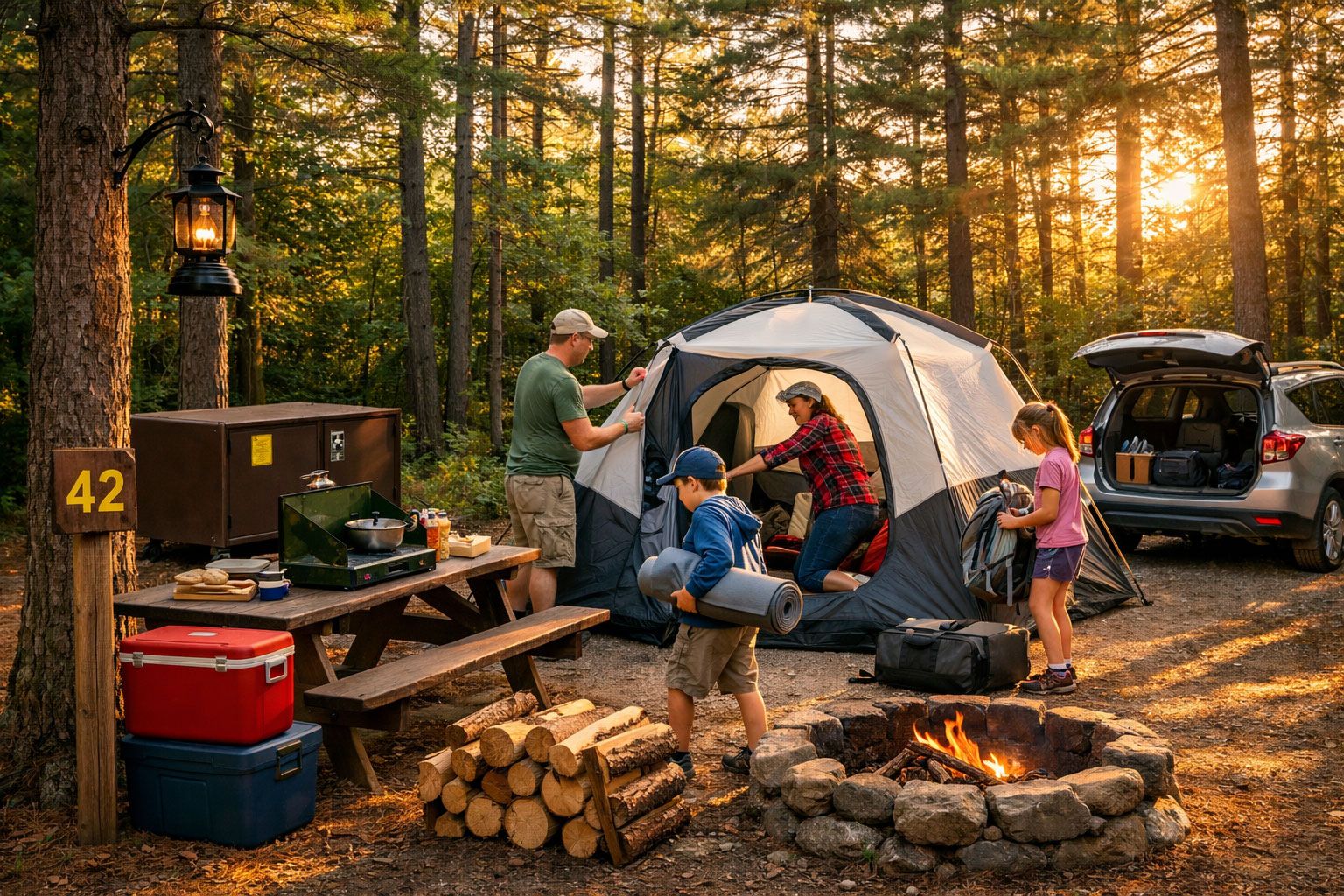
- Bear-proof food lockers (mandatory use)
- Parking pad for 1-2 vehicles
- Access to potable water
- Garbage and recycling stations
- Vault or flush toilets
Premium Amenities (Select Campgrounds):
| Campground | Showers | Flush Toilets | Electrical Sites | Laundry | Beach |
|---|---|---|---|---|---|
| Canisbay Lake | ✓ | ✓ | ✗ | ✓ | ✓ |
| Mew Lake | ✓ | ✓ | ✓ | ✓ | ✓ |
| Pog Lake | ✓ | ✓ | ✗ | ✓ | ✓ |
| Kearney Lake | ✓ | ✓ | ✗ | ✗ | ✗ |
| Rock Lake | ✓ | ✓ | ✗ | ✗ | ✗ |
| Tea Lake | ✗ | ✗ | ✗ | ✗ | ✗ |
What You Must Bring:
- All camping gear (tent, sleeping bags, cooking equipment)
- Firewood (cannot transport from outside park due to invasive species)
- Drinking water containers (taps located centrally, not at each site)
- Biodegradable soap and toiletries
- First aid kit and medications
- Headlamps or flashlights (no site lighting)
Common mistake: Arriving without cash. The park store accepts cards, but firewood vendors at some campgrounds prefer cash. ATMs are only available outside the park.
How Do You Stay Safe from Wildlife in Algonquin Park?
Black bears inhabit all areas of Algonquin Park, and proper food storage is mandatory, not optional. Park staff enforce food storage regulations and will issue fines or evict campers who violate safety protocols.
Mandatory Bear Safety Rules:
- Store all food and scented items in provided metal lockers at developed campgrounds
- Never keep food in tents, including candy, gum, toiletries, sunscreen, or bug spray
- Use bear canisters or hang food at backcountry sites (hanging required at sites without canisters)
- Clean up immediately after cooking and eating
- Burn food scraps completely or pack them out in sealed bags
What Counts as “Food”:
- All edibles and beverages (including water bottles that held juice)
- Coolers and food containers (even if empty)
- Toiletries, cosmetics, sunscreen, lip balm
- Pet food and water bowls
- Garbage and recycling
- Propane canisters and camp stoves
If You Encounter a Bear:
- Stay calm and speak in a firm voice
- Back away slowly while facing the bear
- Never run or climb trees
- Make yourself appear larger if the bear approaches
- Fight back aggressively if attacked (black bears are not grizzlies)
Edge case: Bears become more active in late summer (August-September) when natural food sources decline. Extra vigilance is required during this period, and park staff may close specific sites if bears become habituated to human food.
What Activities Can Families Do at Algonquin Park Campgrounds?
Beyond camping, Algonquin Park offers extensive recreation opportunities suitable for all skill levels and ages. Most activities are free with your vehicle permit, though some require equipment rentals or additional fees.
Popular Family Activities:
Hiking Trails:
- Whiskey Rapids Trail (2.1 km): Easy boardwalk, wheelchair accessible
- Lookout Trail (1.9 km): Moderate climb, panoramic views
- Mizzy Lake Trail (11 km): Wildlife viewing, beaver ponds
- Track and Tower Trail (7.7 km): Fire tower climb, moderate difficulty
Water Activities:
- Canoe and kayak rentals at multiple locations ($35-$65 per day)
- Swimming beaches at Canisbay, Mew, and Pog Lake campgrounds
- Fishing (Ontario fishing license required)
- Stand-up paddleboarding
Educational Programs:
- Visitor Centre exhibits and theater (admission fee applies)
- Evening interpretive programs at campground amphitheaters (free)
- Guided walks with park naturalists (check schedule)
- Algonquin Logging Museum (free admission)
Wildlife Viewing:
- Moose viewing along Highway 60 at dawn and dusk (May-October)
- Wolf howling excursions (Thursday nights in August)
- Bird watching (280+ species recorded)
- Beaver pond observations
Choose activities based on your family’s fitness level. The Visitor Centre staff can recommend appropriate trails and provide current wildlife sighting locations.
Pro tip: The Sunday Creek Trail (5 km) and Centennial Ridges Trail (10 km) offer the best fall color viewing in late September-early October, but expect crowds during peak foliage weekends.
What’s the Difference Between Car Camping and Backcountry Camping in Algonquin Park?
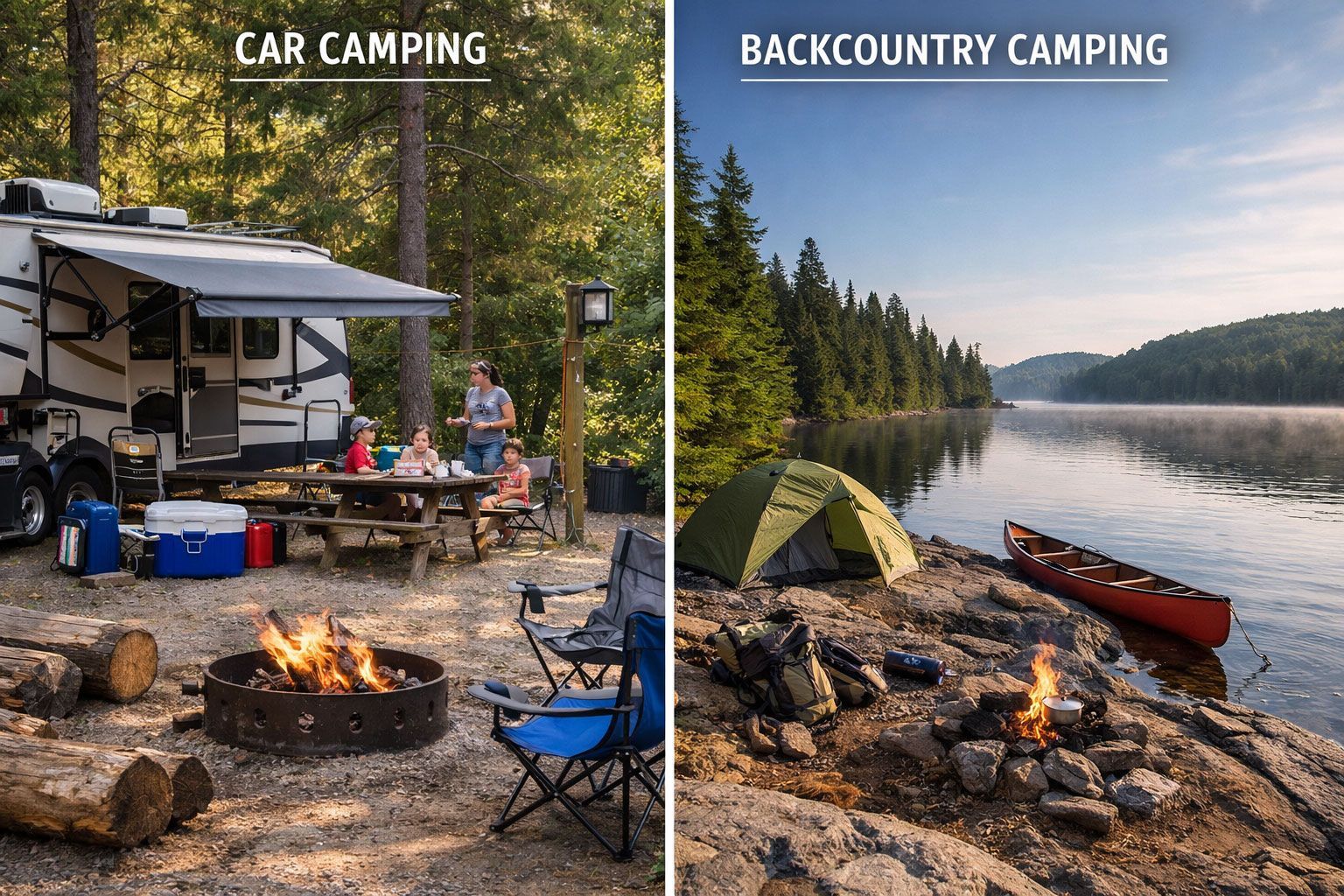
The choice between developed campgrounds and backcountry sites fundamentally changes your Algonquin Park experience. Each option suits different skill levels, comfort preferences, and adventure goals.
Car Camping (Developed Campgrounds):
Pros:
- Drive directly to your site with unlimited gear
- Access to showers, flush toilets, and potable water
- Easier for families with young children
- Can bring coolers, camp stoves, and comfort items
- Campground stores sell forgotten supplies
- Electrical hookups available at Mew Lake
Cons:
- Sites close together (limited privacy)
- Noise from neighboring campers
- More crowded, especially weekends
- Less wilderness immersion
- Higher cost per night for families
Backcountry Camping:
Pros:
- True wilderness solitude
- Pristine natural settings on remote lakes
- Wildlife viewing opportunities increase
- Quieter experience (no generators or loud groups)
- Lower cost for solo campers or couples
- Sense of adventure and accomplishment
Cons:
- Must paddle or hike all gear to site
- No facilities beyond fire pit and thunderbox
- Requires wilderness skills and fitness
- Weather exposure (no shelter buildings)
- Limited rescue access in emergencies
- Not suitable for young children
Decision Rule:
Choose car camping if you have children under 10, are new to camping, need accessibility accommodations, or want to explore Highway 60 attractions daily.
Choose backcountry camping if you’re physically fit, experienced with wilderness camping, seeking solitude, and comfortable with self-reliance for 2+ days.
What Should First-Time Algonquin Park Campers Know?
First-timers often make preventable mistakes that diminish their experience. Understanding these common issues helps families prepare properly and enjoy their visit.
Essential Preparation Checklist:
Before Booking:
- Verify your camping gear is complete and functional
- Check weather forecasts (nights drop to 5-10°C even in summer)
- Purchase annual vehicle permit if visiting multiple times
- Review park regulations and fire ban status
- Book campsites 3-5 months ahead for summer weekends
Packing Essentials:
- Warm sleeping bags rated to 0°C minimum
- Rain gear and extra clothing layers
- Insect repellent (mosquitoes peak June-July)
- Headlamps with extra batteries
- First aid kit with personal medications
- Biodegradable soap and toiletries
- Rope for clothesline and gear hanging
- Tarp for rain shelter over picnic table
On Arrival:
- Stop at West Gate to show reservation confirmation
- Purchase firewood at park store (outside wood prohibited)
- Locate your campsite and park properly
- Identify nearest water tap and toilet facilities
- Test food locker operation before dark
- Attend evening interpretive program for park orientation
Common Mistakes to Avoid:
- Underestimating night temperatures: Even in July, temperatures drop significantly after sunset. Bring warm layers.
- Ignoring bug season: June and early July bring intense mosquitoes and blackflies. Bug nets and repellent are essential, not optional.
- Arriving without firewood: Dead and downed wood collection is prohibited. You must purchase firewood at park stores or vendors.
- Leaving food accessible: Bears will destroy coolers left outside. Use food lockers religiously, even for short absences.
- Relying on cell phones: Service is nonexistent at most campgrounds. Download offline maps and bring physical park maps.
Edge case: If camping in May or September, prepare for near-freezing nights and potential snow. These shoulder seasons offer fewer crowds but require four-season camping gear.
How Does Winter Camping Work at Algonquin Park?
Mew Lake Campground operates year-round, offering a unique winter camping experience with heated facilities. Winter camping attracts experienced campers seeking solitude and winter recreation opportunities.
Winter Season Details (November-April):
- Only Mew Lake remains open
- Heated comfort stations with flush toilets
- Plowed roads to campsites
- Reduced rates: approximately $40 per night
- Fewer crowds (often have campground to yourself)
- No reservations required November-December
Winter Activities:
- Cross-country skiing on groomed trails
- Snowshoeing through winter forests
- Ice fishing on frozen lakes
- Winter wildlife tracking
- Photography in snow-covered landscapes
Additional Winter Requirements:
- Four-season tent or winter camping shelter
- Sleeping bags rated to -20°C or colder
- Insulated sleeping pads (two layers recommended)
- Winter clothing layers and extra dry clothes
- Thermos for hot drinks
- Shovel for snow management
- Extra propane (canisters perform poorly in cold)
Choose winter camping if you’re an experienced camper comfortable with cold-weather gear, seeking a unique off-season experience, and interested in winter recreation activities.
Not recommended for: First-time campers, families with young children, or anyone without proper cold-weather equipment and experience.
What Are the Rules and Regulations for Algonquin Park Camping?
Ontario Parks enforces specific regulations to protect the environment and ensure visitor safety. Violations can result in fines ranging from $100-$5,000 or eviction from the park.
Critical Rules:
Campfire Regulations:
- Fires permitted only in provided fire pits
- Never leave fires unattended
- Completely extinguish before sleeping or leaving site
- Fire bans enforced during dry conditions (check current status)
- Firewood must be purchased within 50 km of park
Quiet Hours:
- 11:00 PM to 7:00 AM daily
- Generators prohibited in most campgrounds
- Music must not be audible at neighboring sites
Pet Policies:
- Pets allowed at developed campgrounds (on leash)
- Prohibited on backcountry trails and campsites
- Must not be left unattended at campsites
- Owners responsible for waste cleanup
Alcohol and Cannabis:
- Alcohol permitted at campsites only (not on trails or beaches)
- Cannabis smoking/vaping permitted at campsites only
- Impaired operation of vehicles or boats prohibited
Waste Management:
- Pack out all garbage from backcountry sites
- Use provided garbage stations at developed campgrounds
- No dumping of grey water (dishwater) on ground
- Human waste in thunderboxes only (backcountry)
Vehicle and Parking:
- Maximum 2 vehicles per campsite
- Parking on designated pads only
- Vehicle permit must be displayed on dashboard
- ATVs and off-road vehicles prohibited
Edge case: Service dogs are exempt from pet restrictions and may accompany owners on backcountry trails with proper documentation.
Frequently Asked Questions
Can you camp anywhere in Algonquin Park?
No. Camping is only permitted at designated campgrounds and backcountry campsites. Random camping is prohibited and subject to fines. All camping requires reservations and permits.
How much does it cost to camp at Algonquin Park in 2026?
Developed campgrounds cost $46-$56 per night plus $21 daily vehicle permit. Backcountry camping costs $14 per person per night. Annual vehicle permits cost $92 and provide better value for multiple visits.
Are campfires allowed at Algonquin Park?
Yes, campfires are permitted in provided fire pits at all campsites when fire bans are not in effect. You must purchase firewood within the park or within 50 km to prevent invasive species introduction.
Do you need a permit to enter Algonquin Park?
Yes. All vehicles entering Algonquin Park require a daily ($21) or annual ($92) vehicle permit. Backcountry camping requires an additional interior camping permit at $14 per person per night.
What is the best campground for families in Algonquin Park?
Pog Lake and Mew Lake are best for families due to swimming beaches, full facilities including showers, and proximity to visitor center activities. Mew Lake offers electrical sites if traveling with an RV.
Can you see moose at Algonquin Park campgrounds?
Moose occasionally wander through campgrounds but are more reliably seen along Highway 60 at dawn or dusk, particularly near roadside ponds and wetlands. May through October offers the best viewing opportunities.
Is cell phone service available at Algonquin Park?
Cell service is extremely limited or nonexistent at most campgrounds and throughout the park interior. Do not rely on phones for navigation or emergencies. Inform someone outside the park of your itinerary.
What should you do if you see a bear at your campsite?
Stay calm, make noise, and back away slowly while facing the bear. Never run. If the bear approaches, make yourself appear larger and speak firmly. Report all bear encounters to park staff immediately.
Can you bring your own firewood to Algonquin Park?
No. Outside firewood is prohibited to prevent invasive species and tree diseases. Firewood must be purchased within the park or within 50 km of the park boundary, with receipt as proof.
How far in advance should you book Algonquin Park camping?
Book 5 months in advance (the maximum allowed) for summer weekends and holidays. Weekdays in June and September often have availability closer to arrival dates. Check for cancellations regularly.
Are there showers at Algonquin Park campgrounds?
Canisbay Lake, Mew Lake, Pog Lake, Kearney Lake, and Rock Lake have shower facilities. Tea Lake, Coon Lake, and Whitefish Lake do not. Backcountry sites have no facilities beyond fire pits and thunderboxes.
What is the best time to visit Algonquin Park for camping?
September offers the best combination of warm days, cool nights, fewer bugs, fall colors, and reduced crowds. July-August are warmest but most crowded. May-June feature spring wildlife but intense insects.
Conclusion
Algonquin Park stands as Ontario’s premier camping destination, offering experiences ranging from family-friendly car camping with modern amenities to remote backcountry adventures deep in the wilderness. Success depends on choosing the right campground type for your skill level, booking well in advance for peak season, and preparing properly for weather, wildlife, and the park’s limited services.
Take These Next Steps:
- Decide on camping style: Choose developed campgrounds for convenience and families, or backcountry sites for wilderness immersion
- Book early: Create your Ontario Parks account now and mark your calendar for reservation opening dates
- Prepare properly: Review the packing checklist and ensure you have appropriate gear for weather conditions
- Study bear safety: Understand and commit to following food storage protocols without exception
- Plan activities: Research hiking trails and programs that match your family’s interests and abilities
Whether you’re watching the sunrise from a backcountry lake or roasting marshmallows at a developed campground, Algonquin Park delivers unforgettable outdoor experiences. The key is matching your expectations and preparation to the camping style you choose. Start planning your 2026 adventure today—the best sites are already filling up.
