
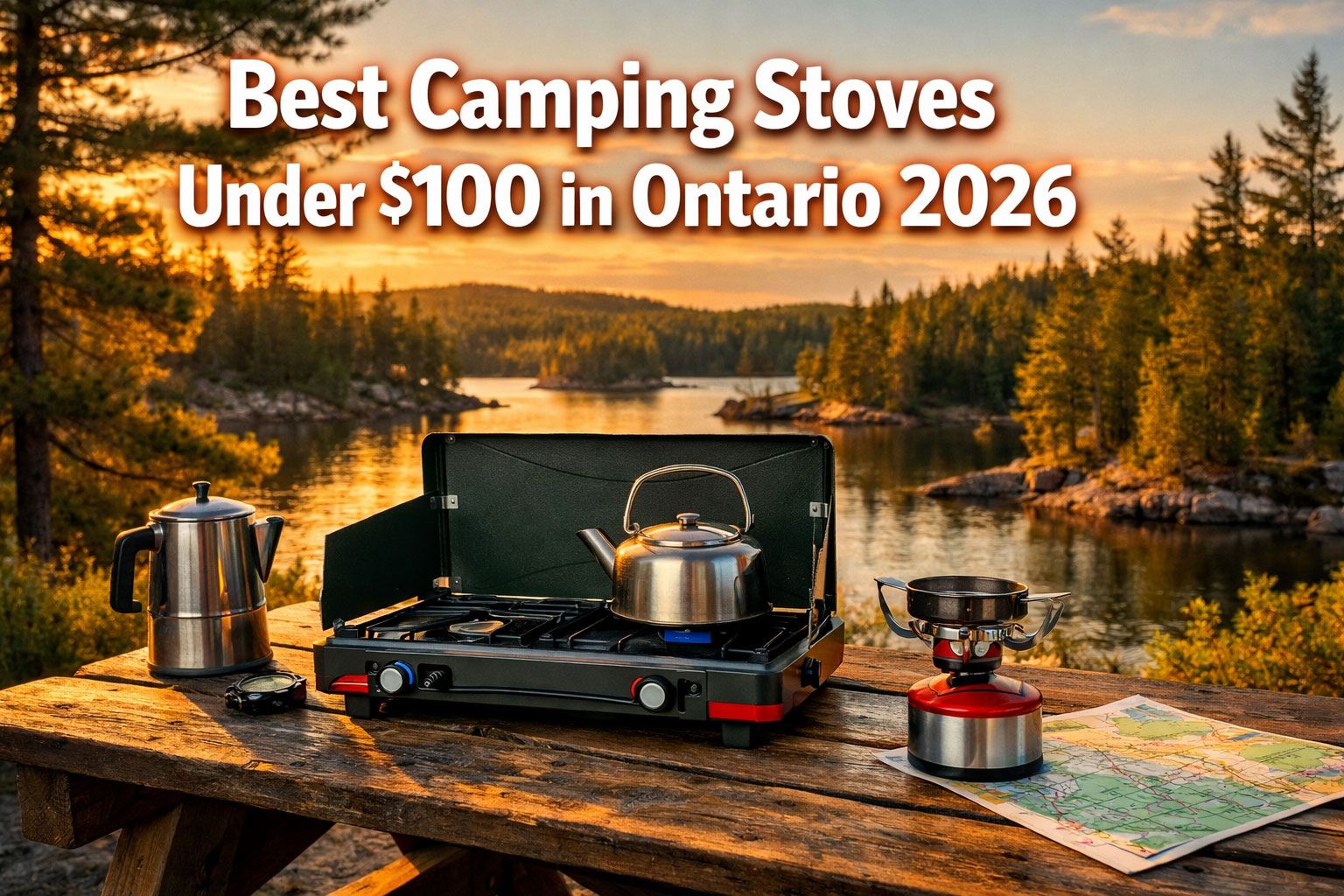
Ontario campers can find reliable portable camping stoves for under $100 that perform well across the province’s diverse camping conditions. The best options include canister stoves ($40-$90) for ease of use, liquid fuel stoves ($70-$100) for cold weather performance, and wood-burning stoves ($50-$80) for backcountry trips. Your choice depends on trip length, season, and whether you’re car camping or backpacking.
Key Takeaways
- Canister stoves offer the best balance of price, performance, and convenience for most Ontario campers under $100
- Liquid fuel stoves handle Ontario’s cold spring and fall temperatures better than canister models
- Wood-burning stoves eliminate fuel costs but require dry conditions and aren’t permitted in all Ontario parks during fire bans
- Boil time matters less than reliability—most budget stoves boil water in 3-5 minutes
- Weight differences between models (8 oz to 2 lbs) significantly impact backpacking comfort
- Fuel availability varies across Ontario—canister fuel is widely available, liquid fuel requires planning
- Wind protection is essential for Ontario’s exposed lakeside campsites
- Simmer control separates basic boilers from true cooking stoves
- Budget $20-30 extra for essential accessories like windscreens and fuel
- Test your stove before heading to remote Ontario locations
What Types of Camping Stoves Work Best Under $100?
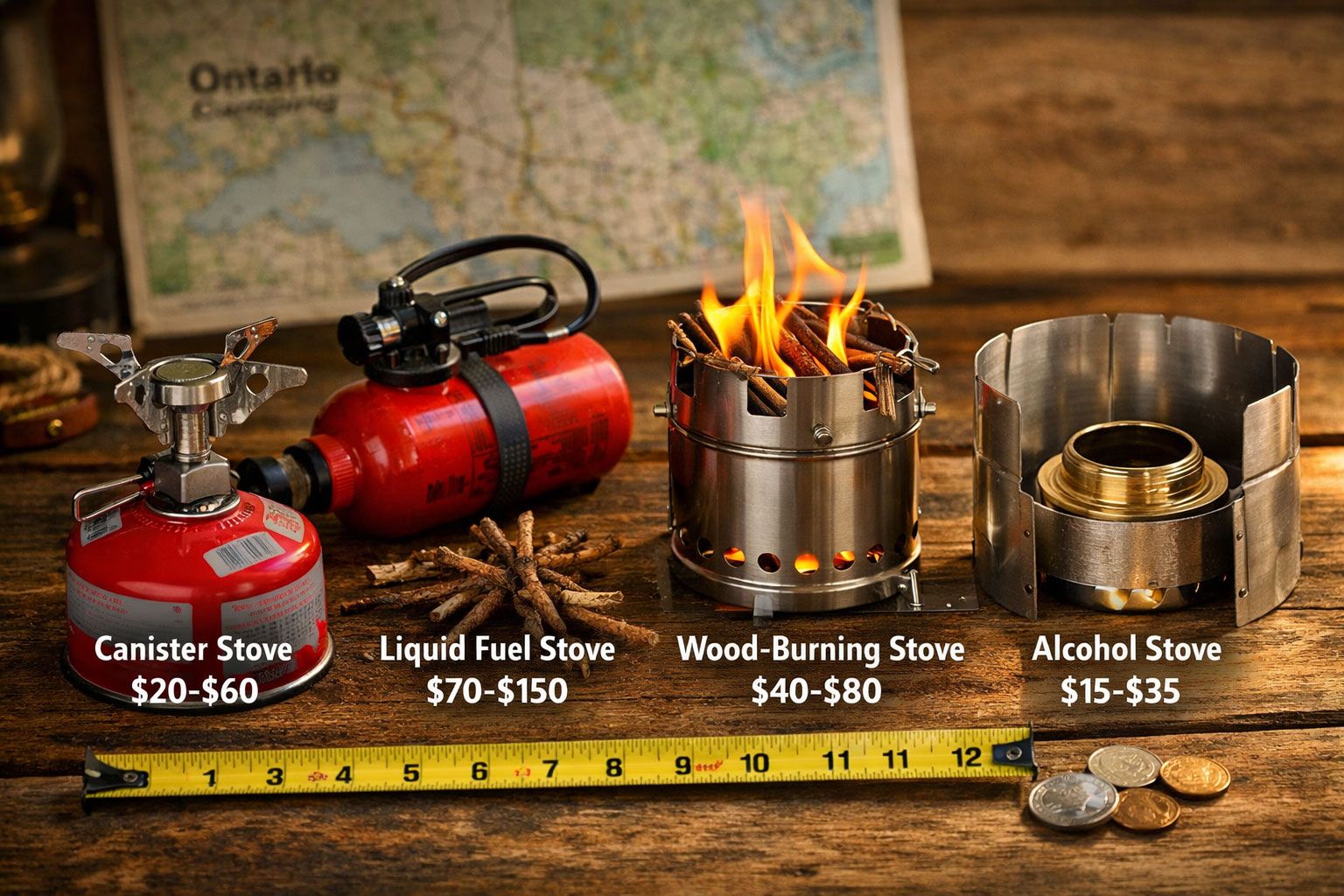
Four main types of camping stoves fit comfortably under the $100 budget, each suited to different Ontario camping scenarios.
Canister stoves ($40-$90) screw directly onto pressurized fuel canisters and offer the simplest operation. They’re ideal for car camping and summer backpacking trips in Ontario’s provincial parks. These stoves light instantly, require no priming, and pack down small.
Liquid fuel stoves ($70-$100) run on white gas or unleaded gasoline and excel in cold weather. For spring and fall camping in northern Ontario, these stoves maintain pressure and performance when temperatures drop below 10°C. They require pumping to pressurize but offer better fuel economy.
Wood-burning stoves ($50-$80) use twigs and natural materials as fuel, making them popular for extended backcountry trips. They work well in Ontario’s boreal forests where deadwood is plentiful, but become useless during provincial fire bans.
Alcohol stoves ($15-$40) represent the ultralight option. While cheap and nearly silent, they lack power for group cooking and struggle in wind—common around Ontario’s Great Lakes campsites.
Choose canister stoves if you want reliability and convenience. Choose liquid fuel if you camp in cold weather or remote areas. Choose wood-burning if you’re an experienced camper comfortable with fire management. Avoid alcohol stoves unless you’re a solo ultralight backpacker willing to accept slow cooking times.
Which Camping Stoves Offer the Best Value in Ontario?
The best value camping stoves balance performance, durability, and price while meeting Ontario’s specific camping conditions.
Top performers under $100:
- MSR PocketRocket 2 ($50-$60): Weighs just 73 grams, boils water in 3.5 minutes, fits in your palm. Best for backpackers who prioritize weight savings.
- Coleman Fyrestorm ($45-$55): Includes built-in wind protection and pressure control. Excellent for Ontario’s windy lakeside sites. Heavier at 215 grams but more stable.
- Camp Chef Mountain Series ($70-$85): Two-burner option for car campers. Cooks real meals, not just boils water. Too heavy for backpacking at 10 pounds.
- Esbit Alcohol Stove ($15-$25): Emergency backup option. Extremely light but slow. Works when other fuel isn’t available.
Common mistake: Buying the lightest stove without considering stability. A stove that tips over with your pot is worthless regardless of weight.
Decision rule: Backpackers should budget $50-$70 for single-burner canister stoves. Car campers can spend $70-$90 for two-burner models with better cooking control.
How Do Camping Stoves Perform in Ontario’s Weather?
Ontario’s climate ranges from humid summers to freezing spring and fall nights, creating specific performance challenges for camping stoves.
Temperature considerations:
Canister stoves lose pressure below 5°C because the fuel mixture doesn’t vaporize efficiently. This affects camping in Algonquin Park in May or October when overnight temperatures regularly drop near freezing. Liquid fuel stoves maintain consistent performance down to -40°C.
Wind impact:
Ontario’s exposed lakeside campsites in places like Killarney Provincial Park face constant wind. Without proper wind protection, stoves lose 50-70% of their heating efficiency. Built-in windscreens or separate wind barriers are essential, not optional.
Humidity and rain:
Summer camping in southern Ontario brings humidity and afternoon thunderstorms. Canister stoves work reliably in wet conditions since the fuel is sealed. Wood-burning stoves become frustrating when you can’t find dry tinder. Liquid fuel stoves require keeping fuel bottles dry but otherwise handle rain well.
Altitude effects:
Ontario’s relatively low elevations (highest point is 693 meters) don’t significantly impact stove performance. Canister stoves work efficiently throughout the province without altitude-related pressure issues.
Pro tip: Keep canister fuel in your sleeping bag on cold nights to maintain pressure for morning coffee.
What Features Matter Most in Budget Camping Stoves?
Not all features deliver equal value when shopping for camping stoves under $100. Focus on these performance factors.
Boil time (3-5 minutes for 1 liter): Faster isn’t always better. A stove that boils water in 2 minutes often lacks simmer control for actual cooking. For Ontario camping where you’re cooking bannock or frying fish, adjustable flame control matters more than raw speed.
Fuel efficiency (measured in boils per canister): Budget stoves typically deliver 40-60 boils from a standard 230-gram canister. This equals 5-7 days of cooking for two people. Liquid fuel stoves stretch further—one liter of white gas provides 100+ boils.
Weight and packed size: Backpackers feel every ounce on portages between Ontario lakes. Canister stoves range from 73 grams (ultralight) to 400 grams (stable two-burner). Car campers can ignore weight and prioritize cooking surface area.
Ignition system: Piezo igniters fail in damp conditions and add weight. Reliable campers carry waterproof matches or a lighter as backup regardless of built-in ignition.
Pot support stability: Wide, sturdy pot supports prevent spills. Test by placing your largest pot on the stove and applying sideways pressure. If it wobbles, keep shopping.
Simmer control: The difference between boiling and simmering determines whether you can cook oatmeal without burning it. Budget stoves often operate as on/off burners with limited flame adjustment.
Avoid these “features”:
- Fancy carrying cases that add bulk
- Integrated pots that limit cooking flexibility
- Complex multi-fuel capability in budget models (usually unreliable)
Where Can Ontario Campers Buy Camping Stoves and Fuel?
Purchasing options and fuel availability significantly impact your camping stove choice in Ontario.
Retail locations:
- MEC (Mountain Equipment Co-op): Toronto, Ottawa, and other major cities. Best selection of backpacking stoves with knowledgeable staff.
- Canadian Tire: Province-wide availability. Strong selection of car camping stoves, limited ultralight options.
- Bass Pro Shops/Cabela’s: Focus on car camping and hunting camp stoves. Good prices on Coleman and Camp Chef brands.
- Local outdoor shops: Better expertise but higher prices. Worth visiting for personalized advice.
Online options:
Amazon.ca delivers to most Ontario addresses within 2-3 days. Prices often beat retail by 10-20%. However, you can’t test stability or see build quality before buying.
Fuel availability:
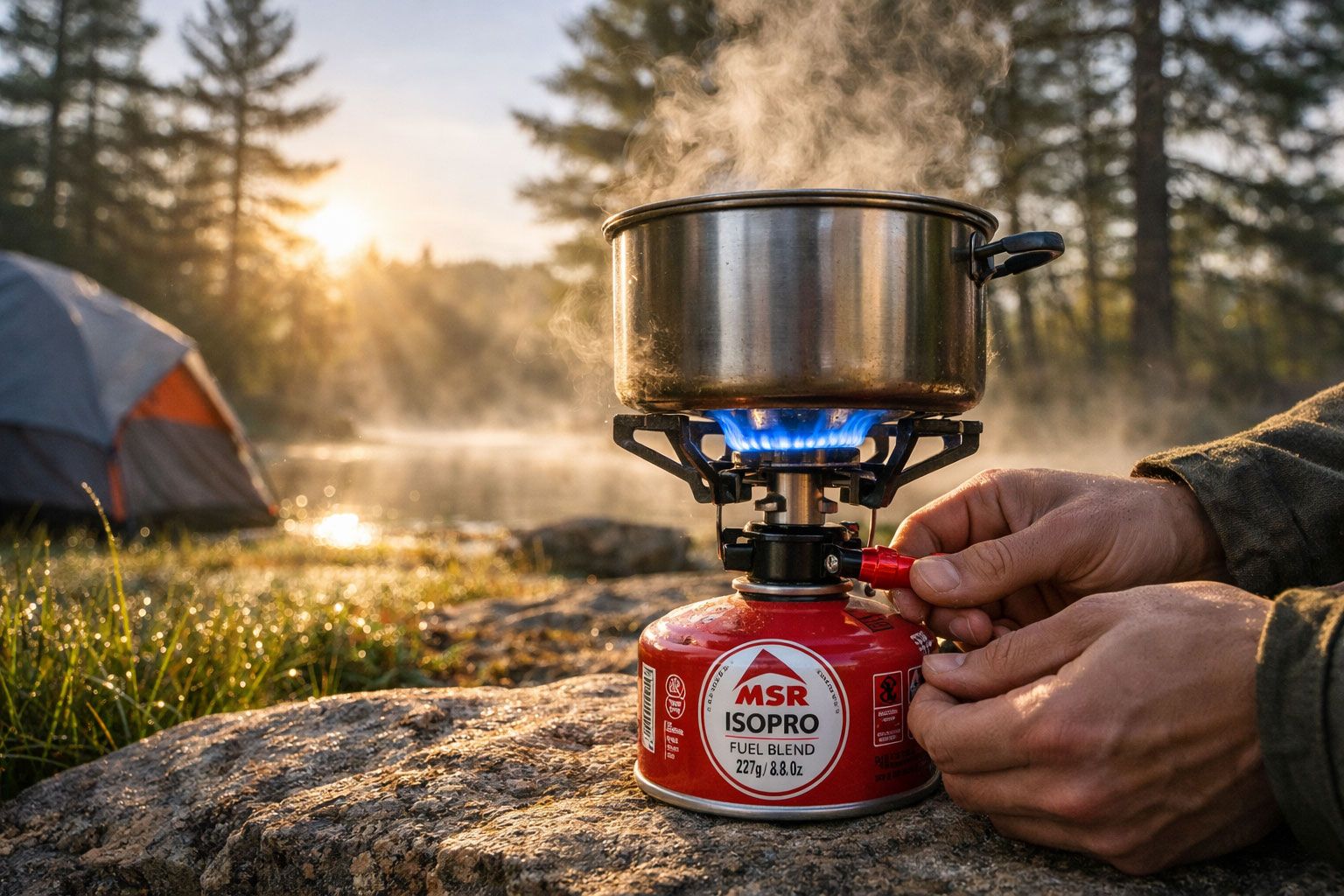
Canister fuel (isobutane-propane mix) is available at Canadian Tire, outdoor shops, and many Ontario Parks gatehouse stores during camping season. Expect to pay $7-$12 per 230-gram canister.
White gas (liquid fuel) requires more planning. Available at MEC, outdoor specialty shops, and some Canadian Tire locations. Not sold at park stores.
Cross-border shopping: U.S. prices are often lower, but you cannot transport pressurized fuel canisters across the border. Factor in exchange rates and travel time.
Rental option: Some Ontario outdoor shops rent camping stoves for $10-$15 per weekend. Useful for testing before buying or occasional campers.
How Should You Maintain Camping Stoves for Longevity?
Proper maintenance extends the life of budget camping stoves and prevents failures during trips.
After each trip:
- Wipe down all surfaces to remove food residue and dirt
- Check fuel connections for damage or wear
- Inspect O-rings for cracks (replace annually for $2-3)
- Store with fuel disconnected in a dry location
Seasonal maintenance:
- Clean burner ports with a thin wire or needle to remove carbon buildup
- Lubricate pump seals on liquid fuel stoves with manufacturer-recommended oil
- Test ignition systems and replace batteries if equipped
- Check for gas leaks by applying soapy water to connections while fuel is attached
Common problems and fixes:
- Weak flame: Clean burner ports or replace fuel canister
- Yellow flame instead of blue: Indicates incomplete combustion—clean the burner assembly
- Fuel leak: Replace O-rings immediately (fire hazard)
- Won’t light: Check fuel level, clean igniter, verify proper assembly
Storage tips:
Never store stoves with fuel attached. Temperature fluctuations in garages and sheds can cause pressure changes and leaks. Keep stoves in their original boxes or padded bags to prevent damage to control valves.
Lifespan expectations: Quality canister stoves last 10+ years with proper care. Liquid fuel stoves require more maintenance but can last 20+ years. Budget stoves under $40 typically last 3-5 years of regular use.
What Are Common Mistakes When Buying Camping Stoves?
Avoiding these errors saves money and frustration for Ontario campers.
Mistake 1: Prioritizing weight over stability
Ultralight stoves under 100 grams often have narrow pot supports that tip easily. On uneven ground at Ontario campsites, stability matters more than saving 50 grams.
Mistake 2: Ignoring fuel availability
Buying a stove that uses specialty fuel unavailable near your camping destinations creates problems. Canister fuel is widely available across Ontario; alternative fuels require planning.
Mistake 3: Buying based on boil time alone
Marketing emphasizes speed, but real cooking requires simmer control. A stove that boils water in 2 minutes but can’t maintain low heat for cooking eggs is limited.
Mistake 4: Skipping wind protection
Budget stoves rarely include effective windscreens. Plan to spend $15-$25 on a separate windscreen or make one from aluminum foil. Without wind protection, fuel consumption doubles.
Mistake 5: Not testing before remote trips
Setting up a new stove for the first time at a backcountry campsite after dark is miserable. Test at home, practice lighting, and verify you have all necessary components.
Mistake 6: Overlooking group size
Single-burner stoves work for solo or duo camping. Groups of 4+ need two stoves or a two-burner model to cook efficiently.
Mistake 7: Forgetting about fire bans
Ontario issues fire bans during dry conditions. Wood-burning stoves become useless during bans. Always have a backup fuel-based stove.
Better approach: Define your primary use case (backpacking vs. car camping), typical group size, and season. Then prioritize features that match those specific needs rather than chasing the “best” stove.
How Do Camping Stoves Compare to Campfire Cooking?
Understanding when to use stoves versus fires helps Ontario campers make better decisions.
Advantages of camping stoves:
- Work during fire bans (common in Ontario summers)
- No waiting for coals—instant cooking heat
- Leave no trace in sensitive backcountry areas
- Precise temperature control for actual cooking
- Function in rain without extensive fire-building skills
Advantages of campfire cooking:
- No fuel costs or weight to carry
- Traditional camping experience
- Provides warmth and ambiance
- Can cook larger quantities simultaneously
- Works with basic equipment (grill grate, cast iron)
Practical approach for Ontario camping:
Most experienced Ontario campers use both. Stoves handle morning coffee and quick meals. Fires provide evening cooking and campsite atmosphere when permitted.
Regulatory considerations:
Ontario Parks restricts fires to designated fire pits. Backcountry camping in some parks prohibits fires entirely to protect wilderness areas. Always verify current fire regulations before your trip.
Fuel comparison:
A weekend camping trip for two people requires one 230-gram fuel canister ($8-$12) or gathering firewood (free but time-consuming). Extended trips make fuel costs add up, favoring fires when permitted.
What Accessories Do You Need for Camping Stoves?
Budget an additional $20-$50 for essential accessories that make camping stoves functional and safe.
Essential accessories:
- Windscreen ($15-$25): Improves fuel efficiency by 40-60%. Aluminum models fold flat and weigh under 100 grams.
- Lighter or waterproof matches ($5-$10): Piezo igniters fail. Always carry backup ignition.
- Fuel canister stabilizer ($10-$15): Widens the base of fuel canisters for better stability on uneven ground.
- Pot with heat exchanger ($30-$50): Reduces boil time by 30% and saves fuel over the season.
Useful but optional:
- Carrying case ($10-$20): Protects stove in your pack and keeps components organized.
- Maintenance kit ($15-$25): Includes O-rings, cleaning needles, and lubricant for field repairs.
- Fuel gauge ($8-$12): Indicates remaining fuel in canisters (shake test works too).
Safety accessories:
- Heat-resistant gloves ($10-$15): Prevents burns when adjusting hot stoves.
- Stable cooking surface ($20-$30): Folding table creates a safe, level cooking area.
DIY alternatives:
Make a windscreen from heavy-duty aluminum foil for under $5. Cut a large juice can to create a basic pot stand. Ontario campers on tight budgets can improvise many accessories.
FAQ
What’s the best camping stove for beginners in Ontario?
The Coleman Fyrestorm or MSR PocketRocket 2 both offer simple operation, reliable performance, and wide fuel availability across Ontario. They require no priming or pumping—just screw on the fuel canister and light.
Can I use camping stoves inside a tent?
No. Using any camping stove inside a tent creates carbon monoxide poisoning risk and fire hazard. Always cook in well-ventilated outdoor areas at least 3 meters from your tent.
How long does a fuel canister last?
A standard 230-gram canister provides 40-60 boils (approximately 1 liter each) depending on conditions. For two people, expect 5-7 days of cooking with morning and evening meals.
Are camping stoves allowed during fire bans in Ontario?
Yes. Ontario fire bans prohibit open fires but permit enclosed flame devices including camping stoves. Always verify current restrictions with Ontario Parks before your trip.
What’s better: canister or liquid fuel stoves?
Canister stoves win for convenience and simplicity. Liquid fuel stoves perform better in cold weather (below 5°C) and offer lower fuel costs for extended trips. Choose based on your typical camping season and trip length.
Can I fly with camping stoves to Ontario?
Empty, cleaned stoves are allowed in checked baggage. You cannot transport fuel canisters on aircraft. Plan to purchase fuel after arriving in Ontario.
How do I dispose of empty fuel canisters?
Puncture empty canisters with a specialized tool (available at outdoor shops) and recycle with metal. Many Ontario municipalities accept punctured canisters in metal recycling. Never puncture canisters that still contain fuel.
Do camping stoves work at Ontario’s altitude?
Yes. Ontario’s highest elevations around 700 meters don’t affect stove performance. Altitude becomes a factor above 2,500 meters, which doesn’t occur in Ontario.
What temperature range do camping stoves handle?
Canister stoves work reliably from 5°C to 40°C. Below 5°C, performance drops significantly. Liquid fuel stoves operate from -40°C to 40°C without issues.
How much should I spend on a camping stove?
Backpackers should budget $50-$70 for quality single-burner canister stoves. Car campers can spend $70-$90 for two-burner models. Spending less than $40 usually means compromising on durability or performance.
Can I use propane barbecue tanks with camping stoves?
Some camping stoves accept bulk propane with an adapter hose. This reduces fuel costs for car camping but adds significant weight and bulk. Not practical for backpacking.
What’s the lightest camping stove under $100?
The MSR PocketRocket 2 weighs just 73 grams and costs around $50-$60. It’s the best weight-to-performance ratio for Ontario backpackers prioritizing ultralight gear.
Conclusion
Finding the right camping stove under $100 for Ontario camping comes down to matching features to your specific needs. Canister stoves offer the best all-around value for most campers, combining reliability, ease of use, and reasonable weight. Liquid fuel stoves serve cold-weather campers better, while wood-burning options appeal to experienced backcountry travelers.
Your next steps:
- Define your primary use: Decide whether you’re mainly car camping or backpacking, and which seasons you camp most often.
- Set your budget: Allocate $50-$70 for the stove itself, plus $20-$30 for essential accessories like windscreens and backup ignition.
- Visit a local retailer: Handle different models to assess stability, build quality, and ease of operation before buying online.
- Test at home: Set up and light your new stove in your backyard before heading to remote Ontario locations.
- Buy fuel locally: Stock up on canister fuel at Canadian Tire or outdoor shops near your camping destination.
The best camping stove is the one you’ll actually use—reliable, appropriate for your camping style, and simple enough that you enjoy cooking outdoors. Ontario’s diverse camping opportunities, from Algonquin’s backcountry to Lake Superior’s shoreline, all become more enjoyable with the right cooking equipment.
